









Difference between Liquid fund & Ultra Short Duration Debt Fund


Whenever we think about investing, there are certain obvious options that come to our minds, and one of them is mutual funds. But when one thinks of mutual funds, it is impossible to avoid the fact that investments in this financial tool comes with its own risks. But then, there isn’t any investment which can be declared completely risk free and there is always some kind of risk associated with both traditional as well as non- traditional investment methods.
Before you invest in mutual funds, it is advisable that you get your short term and long term financial goals charted out. Having a defined set of goals may prove effective in financial planning. Also, having financial goals might aid giving your investments a realistic approach. Once you know your goals, then the next thing for an individual to do is understand their risk tolerance. Risk tolerance is an individual’s tolerance to allow his/her investments to bear losses till the value of the investments go up. If you are someone with zero risk tolerance, that is, if you are a risk averse investor, then you may consider investing in investment vehicles that offer low fixed returns. However if you are someone with a moderately tolerable risk appetite who wants to give their investments an aggressive approach, then you may consider investing in mutual funds.
What is a mutual fund?
Mutual funds are professionally managed funds where the fund house or an AMC (asset management company) collects money from investors sharing a common investment objective and invests the capital raised across the Indian economy in accordance with the scheme’s investment objective.
Mutual funds are further categorized based on certain unique attributes like investment strategy, risk profile, asset allocation, etc. Mutual funds are broadly categorized as equity, debt, hybrid, solution oriented, ETFs among many. Liquid funds and ultra short funds both fall under the debt fund category. However there are certain characteristics that distinguish these two. If you wish to find out more on liquid and ultra short debt funds, continue reading:
Liquid funds
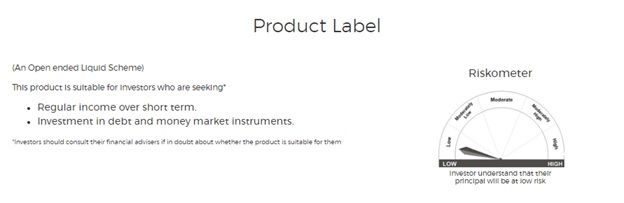
As per SEBI, a liquid fund is supposed to invest in debt and money market funds instruments that come with a maturity date of up to 91 days. That’s because these are open ended liquid schemes who aim to generate capital gains through investments in debt securities that come with a short maturity period. Also, a lot of individuals invest in Axis liquid fund to diversify their mutual fund portfolio and give it some liquidity. Some short term securities in which liquid funds invest include commercial papers and treasury bills. Liquid funds are considered to carry low risk, however this may or may not be true in every situation and hence investors are always advised to invest depending on their risk appetite. Also, if you are looking for allotting a certain portion of your monthly income for emergencies, you may consider liquid funds one of the options.
Ultra short debt funds
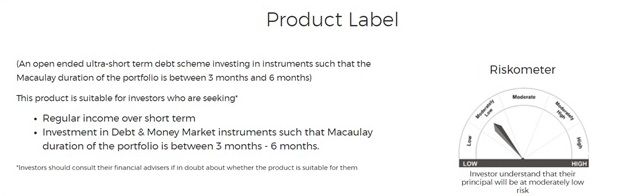
As per SEBI’s regulations, an ultra short debt fund such as Axis Ultra Short Duration Fund is supposed to invest in debt and money market instruments such that the Macaulay duration of the portfolio is between 3 months to 6 months. Hence, may conclude the fact that an ultra short debt fund invests in securities that have a slightly longer maturity period than liquid funds. Ultra short debt funds may levy an exit load on investors who withdraw or redeem their mutual fund units prematurely. While liquid funds generally offer instant redemption facility, the same may not apply while redeeming ultra short debt funds. Ultra short funds may not offer liquidity like liquid funds and hence, one may consider clubbing these with their short term financial goals like renovation of the home or making the down payment of their new car.
Now that you know the difference between these two debt funds, which one are you planning on investing in? Irrespective of what your investment decision is, try to align your mutual fund investments with your financial goal, risk appetite and investment horizon. Mutual fund investments might need some time to generate gains and this is why one should be patient. Also, when you invest in mutual funds, it is essential to not let your emotions get affected by the daily market vagaries. Give your investments some time to grow, let the money do the hard work. If you are completely new to the world of investing and do not understand financial planning it is better to seek the help of a financial advisor. Before investing, do some basic research about the fund like checking it’s past performance or comparing its record with similar mutual funds. This way, you may be able to identify whether the fund is worth investing.
Axis Liquid Fund
An open ended liquid scheme
Axis Ultra Short Duration Fund
An open ended ultra-short term debt scheme investing in instruments such that the Macaulay duration of the portfolio is between 3 months and 6 months
Mutual Fund Investments are subject to market risks, read all scheme related documents carefully.
Calculator
View All








Mutual fund investments are subject to market risks, read all scheme related documents carefully.
Copyrights  2020. All rights reserved Axis Mutual Fund.
Privacy | Terms | Disclaimer | Sitemap