









Why Should You Consider Investing in Axis Special Situations Fund?


Before any investment, a question that one should ask oneself is what exactly are you saving and investing for? The reason to do so is that in order to invest for future, one is cutting back on current expenses. There must be some future purpose for this sacrifice—a future goal whose present value and importance outweigh the pleasure of today’s spending. To achieve any goal, discipline and consistency are vital.
What are mutual funds?
Mutual funds are open ended market linked schemes that aim to generate capital appreciation over the long term by investing in a diversified portfolio of securities. What fund houses owning mutual funds do is that they collect money from investors sharing a common investment objective and invest this pool of funds across the Indian and foreign economy. Depending on the nature of the scheme and its investment objective, a mutual fund scheme may invest across various asset classes like equity, debt, real estate, gold etc.
Mutual fund investors are usually allotted units in quantum with the investment amount and also depending on the fund’s existing NAV (net asset value). The performance of a mutual fund is known to fluctuate depending on the performance of its underlying assets and the various sectors and economies in which it invests.
Invest in mutual funds via SIP or lump sum investment
There are multiple ways for investors to invest in mutual funds. They can either make a one time lumpsum investment or opt for a Systematic Investment Plan. A lump sum investment towards a mutual fund scheme is generally made at the beginning of the investment cycle. On the other hand, Systematic Investment Plan or SIP is an easy and hassle-free way to invest in mutual funds without having to feel a pinch in your pocket. Investors can invest small amounts at regular intervals via SIP as long as the investment amount aligns with the minimum investment amount mentioned in the offer document. One can even refer to an online SIP calculator to determine how much money they need to invest at regular intervals in order to get closer to the corpus amount they are targeting over the long term.
What are special situation schemes?
A special situations fund follows an investment strategy where it tries to take advantage of a special situation which might lead to an increase in the value of a particular asset in future.
Special situation schemes focus on such peculiar goals and direct investments towards these goals.
Axis Special Situations Fund
Axis Special Situation Fund is an open ended equity scheme following special situations theme. It seeks to invest in opportunities arising from special situations such as regulatory changes, new technologies, sector dynamics, company specific changes, consumer behavior changes, and global events. It essentially aims to invest in opportunities presented by a changing business environment. It is a multi-cap, multi-sector fund. Why should investors consider investing in special situations fund?
Those seeking to achieve long term financial goals like buying a new home or going on a world tour after retirement or building a retirement corpus or going or building a wedding corpus for their daughter’s destination wedding can consider investing in special situations fund. Special situations fund also offer SIP investment which is ideal for anyone who wishes to inculcate the discipline of regular investing. Investors can also refer to an online SIP calculator to determine how much money they need to invest at regular intervals in order to achieve the desired corpus. Also, one can benefit from the power of compounding if they invest in special situation fund via SIP for the long run. Compounding refers to the interest earned on the interest earned through the initial investment amount. Thanks to compounding, investors have the chance of generating capital appreciation over the long term. Investors are allotted units in quantum with the investment amount and depending on the fund’s existing NAV (net asset value). When the NAV of the fund is low, more units are allotted and similarly, when the NAV of the fund is high, less units are allotted. This adjustment of units depending on the rise and fall of NAV is referred to as rupee cost averaging. Also, investors with a long term investment horizon should consider starting an SIP because if they wish to build a corpus of Rs. 25 lakhs to Rs. 30 lakhs in the next 15 to 20 years then they need to inculcate the discipline of regular investing.
Investors are expected to consult a financial advisor before investing. Mutual fund investments do not guarantee capital appreciation and hence it is better to consult a financial advisor before investing.
Axis Special Situation Fund
(An open ended equity scheme following special situations theme)
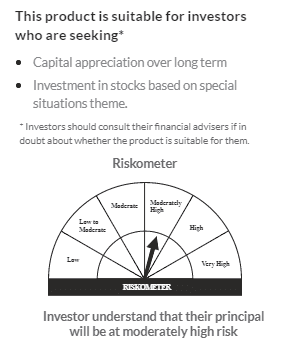
Mutual Fund Investments are subject to market risks, read all scheme related documents carefully
Calculator
View All








Mutual fund investments are subject to market risks, read all scheme related documents carefully.
Copyrights  2020. All rights reserved Axis Mutual Fund.
Privacy | Terms | Disclaimer | Sitemap