








Why Invest in ETF funds for the Long Run?


If you are seeking wealth creation but do not have the patience for making systematic and regular investments then you may have to make a change in your attitude. Those who generally succeed in reaching their financial goals are systematic and regular investors with effective financial planning skills. Financial planning is essential for anyone who improve their existing financial condition in near future. If you want to achieve financial freedom then you must be ready to remain committed to your investments for a very long time. To begin with financial planning, one must first determine their short term and long term financial goals. Once you have a defined set of goals and prioritize them according to your financial needs, narrowing down to an investment scheme that aligns with your investment objective might become easier.
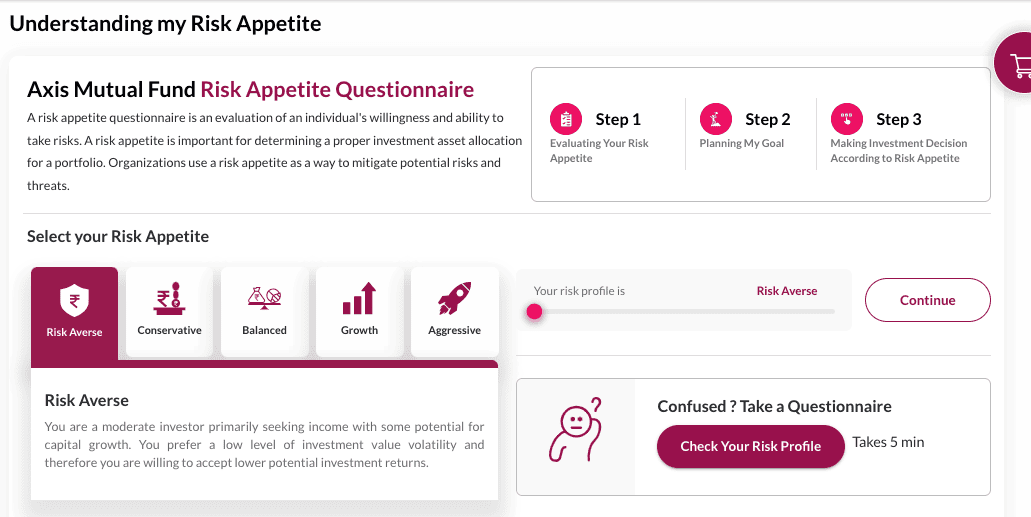
Every individual’s financial goals may vary based on certain attributes like their age, income, existing liabilities etc. and hence, it is better to not mimic the goals of your peers and be realistic with what you want to achieve. Investors who are clear about their goals should go ahead and determine their risk appetite. A risk appetite is an individual’s ability to bear financial risks with hope of earning some profits at some point of time. There are some individuals who have absolute zero tolerance towards risk and generally settle for investment schemes offering low interest rates. However, if you have moderately high risk appetite and seeking capital appreciation through investment in market linked schemes, you can may investing in exchange traded funds.
What are exchange traded funds?
Mutual funds are categorized based on certain unique attributes and some of the major mutual fund categories include, equity funds, debt funds, solution oriented funds, hybrid schemes and ETFs among few other. Exchange traded funds or ETFs, have gained momentum here in India and are becoming popular among both seasoned as well as new age investors.
The job of an exchange traded fund is to track its underlying index/benchmark for example, the NIFTY50 TRI or S&P BSE SENSEX TRI or the price of domestic gold, with minimal tracking error. Securities and Exchange Board of India, the regulator of mutual funds in India describe exchange traded funds as “an open ended scheme which replicates/tracks the particular index. Of the total assets, this fund must invest a minimum of 95 per cent in securities of a particular index (which is being replicated or tracked)”.
Why should one consider investing in exchange traded funds for the long run?
If you have a moderately high risk appetite and are considering investing in ETFs, make sure that you have a long term investment horizon. Historically, exchange traded funds have shown the desired results only when one remained invested in them for the long runs.
Here are some of the reasons why one should consider remaining invested in exchange traded funds for a longer time period:
ETFs offer diversification of risk
A single Nifty ETF unit is packaged in such a way that it consists of multiple company stocks and other marketable securities in smaller quantities. Investing in such a diversified portfolio might be a better idea. That’s because if one sector/industry collapses, it is less likely that other industries will collapse in tandem. This way the investment evens out losses and balances the overall portfolio risk. Hence ETFs can be added to one’s mutual fund portfolio to for diversification as well as risk management.
ETF investments offer liquidity
Although it is better to have a long term investment horizon while investing in ETF funds, there is no hard and fast rule which obligates investors to remain invested for any specific tenure. This is actually good especially if your investment portfolio consists of investment vehicles that come with a statutory lock in. ETFs do not come with a lock in period, which means you can buy or sell your ETF units on any business day. You need not hold onto your ETF investments or any specific time period and can liquidate them during times of emergency when you need immediate cash.
You can buy an ETF scheme with growth option
If you have made a decision to invest in an ETF fund, there are two scheme options available. You may either go with IDCW payouts or you may opt for the growth option. If you are investing in ETF for regular income then you might go with the IDCW payouts. However, investors with a long term investment horizon generally opt for the growth option while investing in ETFs. In growth option, the profits earned by the fund are reinvested back in the scheme. In the long run, investors with a long term investment horizon may benefit if they go with the growth option.
Investing in ETFs have their own perks but investors should understand that these are marked linked schemes and hence returns are never guaranteed. So it is better to identify your risk appetite before considering investing in any ETF fund.
Axis NIFTY ETF
An open ended Scheme replicating / tracking Nifty 50 Index
Mutual Fund Investments are subject to market risks, read all scheme related documents carefully.
Calculator
View All








Mutual fund investments are subject to market risks, read all scheme related documents carefully.
Copyrights  2020. All rights reserved Axis Mutual Fund.
Privacy | Terms | Disclaimer | Sitemap