









Why Invest in Dynamic Asset Allocations Funds?


The journey to wealth creation may not be that difficult if you are good at financial planning. But to begin with financial planning, you may need to be good at money management first. Financial planning, money management, retirement planning and investment planning are all interlinked and anyone who seeks future financial stability should get all these four straight. Today’s young generation has a tough time managing their monthly expenses with the pay cheque. Most of these individuals like to pay cheque to pay cheque, and are generally bankrupt right before the month ends. If your goal is to accumulate wealth in the long run, you may have started saving at an early stage in your life.
But savings alone may not be able to help you sustain in the future. In fact, inflation can eat up your savings. The cost for healthcare is always on the rise and a few years from now, they are going to get even pricier. In such a scenario the sensible thing for an individual to do is start investing a certain portion of their savings. Investing may be the only answer to wealth creation. It is almost impossible to become wealthy overnight. It is only through systematic investing that one may be able to achieve their ultimate financial goal.
Retail investors are expected to keep their investment portfolio diversified as per their risk appetite. It is always good to have a mix of equity and debt so that not only your portfolio remains diversified, but it also aids risk management. However, there are some people who are risk averse and do not intend to risk their finances with market linked schemes. Such investors are happy to continue investing in conservative schemes that offer low fixed interest rates. However, if you are someone who seeks capital appreciation by investing in market linked schemes, you may consider investing in mutual funds.
What are mutual funds?
In the recent past, mutual funds have gained traction among retail investors here in India. Although they do not offer any fixed returns, mutual funds are known offering long term capital appreciation to those who invest regularly and keep a long term investment horizon. A mutual fund is an investment tool that gives investors an opportunity to invest in multiple asset classes through single investment. What fund houses do is that they collect money from investors sharing a common investment objective and invest this pool of funds across the Indian economy. Mutual fund holders are allotted units in quantum with the investment amount and depending on the fund’s existing NAV.
What are Dynamic Asset Allocation Funds?
For those who do not know, mutual funds are further categorized by SEBI for investors to have a clear understanding when making an investment decision. Some of the major mutual funds categorize include equity, debt, solution oriented, ETF, FoF, index, hybrid, etc.
Hybrid funds are those mutual funds that invest in both equity and debt related instruments. Dynamic funds come under hybrid funds. Dynamic equity funds too, have a mix of both equity and debt related instruments in their portfolio.
Why might one consider investing in Dynamic Asset Allocation Funds?
Here are some of the reasons why an individual might consider investing in dynamic asset allocation funds:
You can withdraw at any given time
Dynamic funds do not come with any lock in period. This means that investors are not obligated to remain invested in a dynamic asset allocation fund for any specific tenure. You may continue investing in dynamic funds till your investment objective is achieved or you may withdraw the units on as per your convenience
Diversify your mutual fund portfolio
You know that dynamic asset allocation funds invest in both equity and debt related instruments. The fund manager allocates assets depending on the market situation. Equity investments made by the fund are supposed to offer capital appreciation whereas the debt portion tries to manage risk through active asset allocation.
Invest with multiple options
You can invest in dynamic asset allocation funds via SIP or lumpsum depending on your investment objective. If you have capital sitting idle you may make a lump sum investment. On the other hand with SIP, you can continue investing regularly till your investment objective is achieved. A systematic investment plan allows one to continue investing in small amounts at regular intervals.
If you are planning to invest in a dynamic asset allocation fund, you may take a look at Axis Dynamic Equity Fund.
Axis Dynamic Equity Fund
An open ended dynamic asset allocation fund
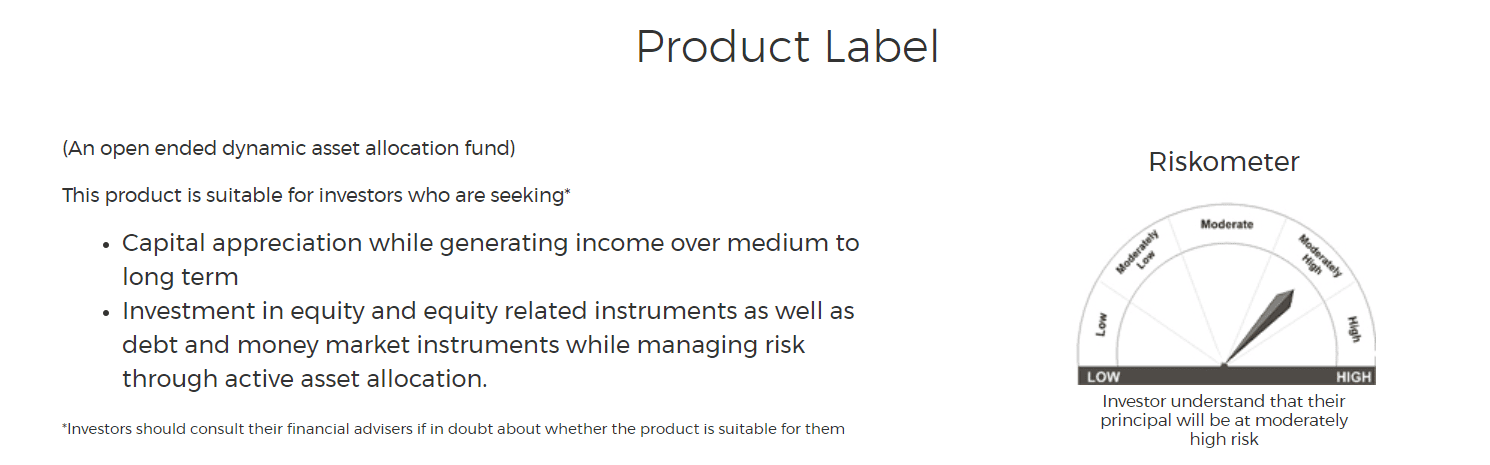
Mutual Fund Investments are subject to market risks, read all scheme related documents carefully.
Calculator
View All








Mutual fund investments are subject to market risks, read all scheme related documents carefully.
Copyrights  2020. All rights reserved Axis Mutual Fund.
Privacy | Terms | Disclaimer | Sitemap