









What are Thematic & Sectoral Funds?


What are Thematic & Sectoral Funds?
The Indian investor is always confused as to whether he/she should stick with conservative investment avenues or switch to aggressive new age investment vehicles like mutual funds. The answer to this question becomes easy to answer if you are good at financial planning. Financial planning is the art of managing your money and spreading your finances through an applied investment strategy. Ideally, one should list out their short term and long term goals and prioritize them according to their importance in an individual’s life. Long term goals like retirement planning may need several years’ worth of investment and hence it is better to have a long investment horizon while planning long term financial goals.
Once you know your goals, the next thing to do is identify your risk appetite. It is important for an investor to know their risk appetite as it allows you to identify how much risk you are willing to take with an investment scheme for seeking potential returns. There are numerous investment schemes available in the market, all carrying various risk profiles depending on their investment goal and strategies. When you know your limits, finding a scheme becomes a bit easier. Retail investors with zero risk appetite might find low fixed interest offering schemes more lucrative. However those who wish to give their investments an aggressive approach may consider investing in mutual funds.
What is a mutual fund?
Mutual funds are a pool of professionally managed funds where the fund houses collect money from investors sharing a common investment objective and invest this pool of funds across the Indian economy in multiple assets including equity, debt, G-sec, T-bills, corporate bonds, etc.
SEBI, the regulator of mutual funds in India, defines mutual funds as, “a mechanism for pooling the resources by issuing units to the investors and investing funds in securities in accordance with objectives as disclosed in the offer document. Investments in securities are spread across a wide cross-section of industries and sectors and thus the risk is reduced. Diversification reduces the risk because all stocks may not move in the same direction in the same proportion at the same time. Mutual fund issues units to the investors in accordance with the quantum of money invested by them. Investors of mutual funds are known as unitholders.”
Mutual funds are further categorized by SEBI so that investors are able to make informed investment decisions. Mutual funds vary depending on several attributes like risk profile, investment horizon, asset allocation, risk profile, fund size, etc. Some of the major mutual fund categories include equity, debt, solution oriented, hybrid, ETFs, index funds, etc.
This second half of the article focuses on thematic and sectoral funds that come under equity funds.
What are Thematic/Sectoral funds?
As per SEBI guidelines, a thematic/sectoral fund must invest a minimum investment of 80 percent of its total asset in equity and equity related instruments of a particular sector/particular theme. A lot of people feel sectoral and thematic funds to be the same, but there is a slight difference between the two. While sectoral funds invest in only one particular sector, thematic funds invest in several sectors that surround a certain theme.
What are some of the features of thematic and sectoral funds?
Here are some of the reasons that make sectoral and thematic funds stand out:
| Thematic funds | Sectoral funds |
| Thematic funds usually invest in sectors with various themes such as multi-sector, international exposure, export-oriented, rural India, etc. | Sectoral funds usually invest in natural resources, utilities, real estate, finance, health care, technology, communication, refined metals |
| Since these funds invest in equity, thematic are funds considered to be risky | A sectoral fund generally aims at providing investors with exposure to a particular sector which other may not catch the eye of the investor |
| Investors seeking capital appreciation from thematic funds may need to have a long term investment horizon | Individuals with risk appetite seeking capital appreciation through indirect equity investments may consider investing in sectoral funds |
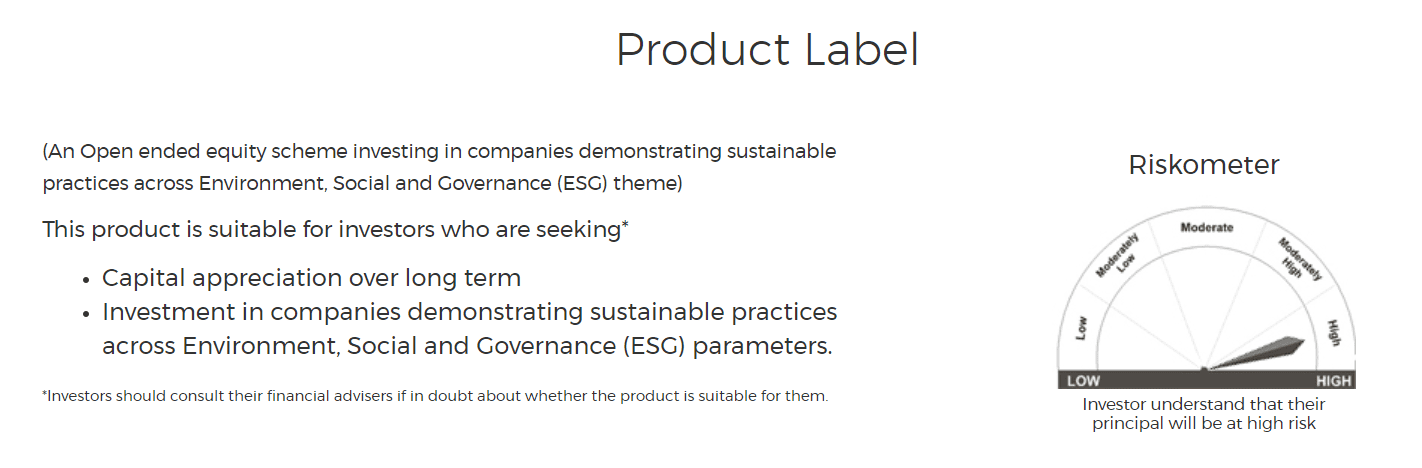
If you are planning on investing in thematic/sectoral funds, make sure that you do adequate research about these funds and only consider investing in funds that have a proven track record. Axis ESG Equity Fund is a thematic fund investing in companies showcasing sustainable practices across Environment, Social and Governance (ESG) parameters. Of the total assets, Axis ESG Equity Fund invests some part in global sustainable companies. It also directly invests in overseas securities with an emphasis on developed markets with a high level of ESG maturity. However, if you are completely new to mutual fund investments, it is better that you consult a financial advisor who might be able to help you with your investments in a better way.
Axis ESG Equity Fund
An Open ended equity scheme investing in companies demonstrating sustainable practices across Environment, Social and Governance (ESG) theme
Mutual Fund Investments are subject to market risks, read all scheme related documents carefully.
Calculator
View All








Mutual fund investments are subject to market risks, read all scheme related documents carefully.
Copyrights  2020. All rights reserved Axis Mutual Fund.
Privacy | Terms | Disclaimer | Sitemap