









What is Axis Equity Savings Fund?


Every individual wishes to achieve financial stability at some point of time in their lives. But very few realize that one can only attain financial stability if they start investing at an early stage in their lives. If you want to be a successful investor, you may have to get good at financial planning. The term financial planning may seem heavy, but it is not that complex. Basically, as an investor, you need to have a clear idea about what you want to achieve in the long run. Making a list of short term and long term financial goals is the first step of financial planning. When you have a defined set of goals, you are able to make a sensible investment decision.
Some investors find it difficult to make a financial plan because they lack money management. Now remember that if you want to invest, you need to have some capital for initial investment. But if you are one of those who find it difficult to manage their daily expenses with their monthly income, you may have to bring in some modifications in your lifestyle.
Once you have saved some money for investing, the next thing for an investor to do is determine his / her risk appetite. Remember that every investment scheme carries a different risk profile and hence investors are advised to know their risk appetite before investing their hard earned money in any type of investment scheme. A risk appetite is nothing but an individual’s ability to risk their finances with an investment scheme with the hope of seeking some capital appreciation in the long run.
There are some investors who have absolutely zero risk appetite. Such investors generally do not wish to risk their finances and hence settle with low interest offering schemes. On the other hand, if you are someone who is seeking capital appreciation through market linked schemes, you may consider investing in mutual funds.
What is a mutual fund?
A mutual fund is a pool of professionally managed funds that is usually owned by a fund house of an Asset Management Company (AMC). These AMCs/ fund houses collect money from investors sharing a common investment objective and invest this pool of funds across the Indian economy. The capital is spread across multiple asset classes like stocks, debt, government securities, corporate bonds, call money, certificate of deposits, etc.
SEBI, the regulator of mutual funds in India, defines them as, “a mechanism for pooling the resources by issuing units to the investors and investing funds in securities in accordance with objectives as disclosed in the offer document. Investments in securities are spread across a wide cross-section of industries and sectors and thus the risk is reduced. Diversification reduces the risk because all stocks may not move in the same direction in the same proportion at the same time.”
Mutual funds are further categorized by SEBI so that investors have a better idea about different schemes when making an investment decision. There are several factors like risk profile, asset allocation, investment strategy, etc. that distinguish one mutual fund from another. Some of the major mutual fund categories include equity, debt, hybrid, solution oriented, ETF and index funds.
What are hybrid funds?
Hybrid funds are mutual funds that avoid the concentration of risk by investing in both equity and debt related instruments. Hybrid funds are considered to be ideal for those who do not wish to give their finances a complete exposure to equities and want to balance risk by investing partially in debt as well.
What is Axis Equity Savings Fund?
Axis Equity Savings fund is an open ended scheme investing in equity, arbitrage and debt. The investment objective of Axis Equity Savings Fund is to provide capital appreciation and income distribution to the investors by using equity and equity related instruments, arbitrage opportunities, and investments in debt and money market instruments. However, there is no assurance or guarantee that the investment objective of the Scheme will be achieved.
Benefits of investing in Axis Equity Savings Fund
Here are some of the reasons why one may consider investing in Axis Equity Savings Fund:
- Axis Equity Savings Fund follows a multi-asset strategy that helps investors avoid the trap of over investing in one asset class, thus, reducing the overall risk and volatility.
- Axis Equity Savings Fund might be ideal for people who want to have a balanced approach to portfolio management.
- Given that the money in Axis Equity Savings Fund is diversified across different asset classes, it reduces the impact of bad performance from a single asset class through performance from the other two asset classes.
However, investors should bear in mind that Axis Equity Savings Fund carries a moderately high risk profile and they should consider investing in this fund only if their risk appetite allows them to do so.
Axis Equity Savings Fund
An open ended scheme investing in equity, arbitrage and debt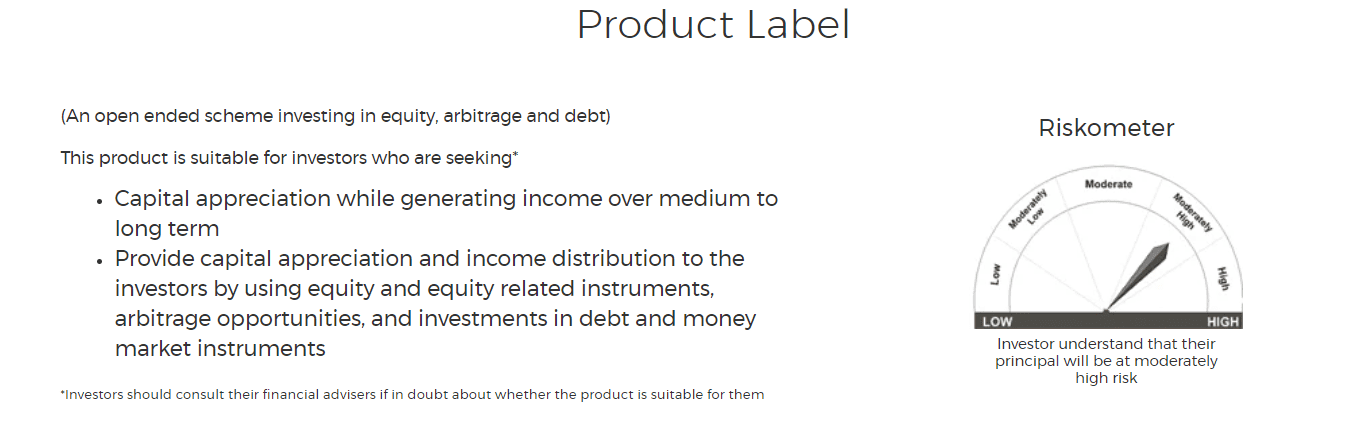
Mutual Fund Investments are subject to market risks, read all scheme related documents carefully.
Calculator
View All








Mutual fund investments are subject to market risks, read all scheme related documents carefully.
Copyrights  2020. All rights reserved Axis Mutual Fund.
Privacy | Terms | Disclaimer | Sitemap