







Volatile Markets? Stay Invested


Investing can be difficult due to the volatile nature of the markets ? one day they are soaring, the other day, they are plunging! Many investors tend to exit their investments during periods of high volatility or bearishness. But, this may not always be a good idea. At such times, it may be wise to keep our emotions in check and stay invested. Why? Because staying invested over the long term can have benefits.
In this article, we?ll talk why it may be smart to stay invested even during turbulent times.
What are Volatile Markets?
In financial markets, volatility refers to short-term price fluctuations. All financial markets experience volatility as an inherent part of their nature. If we see the price chart of any financial security or index, we will see that the prices have fluctuated considerably over the short term. This is because the pricing of a security depends on its demand and supply, which is constantly changing.
As markets are volatile, any investor is bound to experience bearish phases. However, bearish phases usually do not last forever. The market may make a recovery and enter a bullish phase as well, but this may happen over a longer period.
For example, the BSE Sensex went from 49,000 (January 2020) to 30,000 (March 2020) during the coronavirus pandemic. However, the market recovered eventually and reached a new high of 54,000 in 2022.
Why Stay Invested?
Historically, the Nifty50 index has delivered compound annual growth rate (CAGR) of 11.1% from its inception in 1995 to February, 2025. These gains are despite significant market downturns that occurred due to the dot com bubble, the sub-prime housing mortgage crisis, and the coronavirus pandemic.
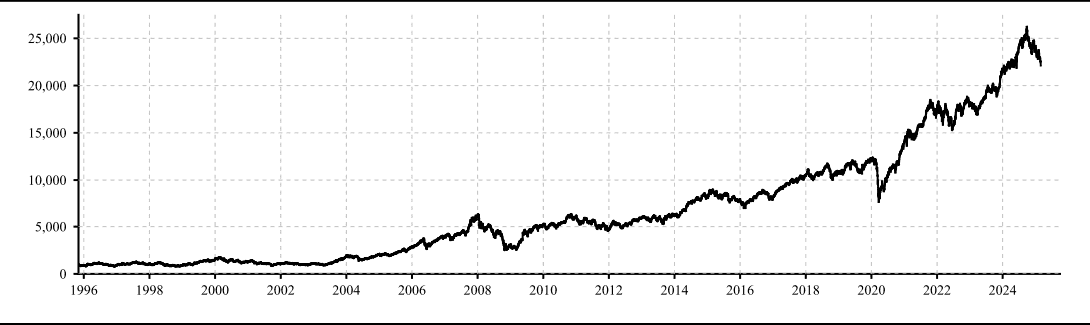
Past performance may or may not be sustained in future.
Investors who are worried about bear markets can take heart from the fact that the Indian equity market has historically shown tremendous resilience. Hence, it can be sensible for investors who are experiencing volatility to lengthen their investment horizon and stay invested for the long term.
-----------------------------------------------------------
/mutual-fund-knowledge-centre/infographics/top-reasons-why-experts-advise-to-stay-invested-in-volatile-markets
https://niftyindices.com/Factsheet/ind_nifty50.pdf
SIPs are an ideal tool to inculcate discipline and whether volatility. As SIPs involve investing a regular amount every month, investors can average the cost of their investments over a long period of time. When the market is high, you buy fewer units and when the market is low you can buy more units. Hence, it protects you from short-term volatility.
During a particularly volatile phase, investors may want to reconsider their investment amount. If so, investors can take advantage of flexi SIPs. A Flexi SIP is the same as a regular SIP, except that investors can change how much they invest during a particular month. If the market is bearish, a flexi SIP will invest more so you can potentially gain from a market bounce-back.
The flexi SIP can be a great way for investors to have more control over their investments.
Timing the market means trying to buy when the market is at a low point and selling when the market is high. Consistently timing the market requires considerable expertise, time, and experience.
Instead, investors can stay invested during volatile phases without having to worry about trying to time the market and ride out choppy seas.
Conclusion
Volatile periods can be worrying for investors. However, emotional bias should not drive investment decisions. Overall, investors should keep in mind that bearish and bullish cycles are inevitable and stay invested for the long term.
Disclaimers:
This document represents the views of Axis Asset Management Co. Ltd. and must not be taken as the basis for an investment decision. Neither Axis Mutual Fund, Axis Mutual Fund Trustee Limited nor Axis Asset Management Company Limited, its Directors or associates, shall be liable for any damages including lost revenue or lost profits that may arise from the use of the information contained herein. No representation or warranty is made as to the accuracy, completeness or fairness of the information and opinions contained herein. The material is prepared for general communication and should not be treated as a research report. The data used in this material is obtained by Axis AMC from the sources which it considers reliable. While utmost care has been exercised while preparing this document, Axis AMC does not warrant the completeness or accuracy of the information and disclaims all liabilities, losses and damages arising out of the use of this information. The AMC reserves the right to make modifications and alterations to this statement as may be required from time to time.
Mutual Fund Investments are subject to market risks, read all scheme-related documents carefully.
Calculator
View All








Mutual fund investments are subject to market risks, read all scheme related documents carefully.
Copyrights  2020. All rights reserved Axis Mutual Fund.
Privacy | Terms | Disclaimer | Sitemap