






Understand the Difference Between Mid and Small Cap Funds


If you are someone who is unhappy with their existing financial status, you may be lagging at financial planning. A lot of young individuals find it difficult to cope with financial planning and most of the time blame it on their below par monthly salaries. But the truth is, a lot of these young individuals lag at money management, because of which their monthly expenditures supersede the monthly income. Financial planning is the key to anyone who wishes to build wealth over the long run. Remember that it is almost impossible to become a millionaire overnight and if you want to create wealth, you may have to start saving and invest some portion of your monthly savings in lucrative investment schemes.
Money management and financial planning
Managing money may seem like a task but it is actually not that difficult. The important here is keeping your expenses to minimum and spending only when necessary. You do not have to spend on fancy dinners or have to party with your friends and colleagues every weekend. Instead, invest that money in groceries and cook at home. Spending thousands of rupees for watching films in multiplexes is something that may not help you with saving money. We are not saying that you completely change your lifestyle and lead a mundane life. But what we are trying to tell you is you need to make some significant changes and limit your unnecessary expenses, so that you are able to attain financial stability. If you are using a personal vehicle like a car or a motorcycle, take the public transport. If you are a shopaholic and spend on clothes and accessories every week, try limiting it to once a month. You have to take control of your life and the sooner you start saving, the more time you have in hand to build a corpus.
Just like mastering the art of money management is essential in financial planning, so is having a set of defined short term and long term goals. Once you know your goals, you may implement a strategy and spread your investments across financial vehicles as per your investment objective. Financial planning is a step-by-step process for managing the outflow and inflow of funds. A short term goal is something that you want to achieve in the next two or three years. On the other hand, long term goals are those financial goals that are planned for financially securing your future. For example you may want to build a retirement corpus for your sunset years. One may need at least Rs. 25 lakhs to Rs. 30 lakhs if they have to secure their post retirement life. Building such a large amount needs a lot of time and hence one may need at least 20 to 30 years of systematic investing if they have to come close to that corpus figure. And you also need to look out for a scheme which has the potential to beat inflation and offer you long term capital gains so that you are able to build a decent retirement corpus. On the other hand if you have short term goals like buying a car or renovating your house, you may have to invest in a scheme that has the potential to offer decent capital gains over a period of three years. Through this we may infer upon the fact that your investments should always align with your financial goals.
Another aspect of financial planning is risk management. There are a plethora of investment options catering to the needs of all types of investors. And if you want to understand what investor category you fit in, it is essential to understand your risk appetite. Risk appetite is a term used to identify an individual’s ability to bear financial risks with the hope of potentially earning capital gains. Managing risk is crucial in financial planning. The last thing you want is to sink in losses because you overinvested in a scheme without understanding your risk appetite. It helps you in setting boundaries and helps you understand your limitations. This way someone with a zero risk appetite will refrain from schemes having a risk rewards ratio. Such investors may want to look for conservative investment schemes offering low but fixed interest rates. And individuals who wish to give their investment portfolio an aggressive strategy may consider investing in tools like mutual funds. But before investing in mutual funds, it is necessary that you have a long term investment horizon because some funds like equity mutual funds only perform when investors remain invested for the long run. Also, do make sure that your existing liabilities do not cause hindrance and burn a hole in your pocket. Remember that only when you learn to manage money, you will be able to save and invest.
This article mainly focuses on mid cap funds and small cap funds and also aims to focus on some of the facts that distinguish these two. But first, let us understand mutual funds in general.
What are mutual funds?
Securities and Exchange Board of India (SEBI), the regulatory body of mutual funds here in India describe them as, “a mechanism for pooling the resources by issuing units to the investors and investing funds in securities in accordance with objectives as disclosed in the offer document.
Investments in securities are spread across a wide cross-section of industries and sectors and thus the risk is reduced. Diversification reduces the risk because all stocks may not move in the same direction in the same proportion at the same time. Mutual fund issues units to the investors in accordance with the quantum of money invested by them. Investors of mutual funds are known as unitholders.
The profits or losses are shared by the investors in proportion to their investments. The mutual funds normally come out with a number of schemes with different investment objectives which are launched from time to time. A mutual fund is required to be registered with Securities and Exchange Board of India (SEBI) which regulates securities markets before it can collect funds from the public”
In case that was confusing, here is a definition to understand mutual funds. Mutual funds are professionally managed funds, where AMCs collect money from investors sharing a common investment objective and invest this pool of funds across the Indian economy in various sectors and industries. The money is invested in equity related instruments like stocks and other money market instruments including debt securities, certificates of deposits, commercial papers, government issued bonds, call money, treasury bills, etc. The performance of a mutual fund is supposed to depend on the performance of its underlying assets. Mutual fund investors are allotted shares in the form of mutual fund units in quantum with the money they invested and depending on the existing NAV (net asset value).
Mutual funds invest in companies with market capitalization depending on the scheme’s risk profile, investment objective, asset allocation, fund size etc. These are large cap funds, mid cap funds, small cap funds, multicap funds and large & mid cap funds.
What is market capitalization?
Market capitalization is a company’s value that is traded on the stock exchange. Market capitalization is calculated by multiplying the total number of shares by the current share price of the company. Market capitalization can be further simplified using this simple formula. It is generally referred to as a market cap where ‘cap’ stands for capitalization.
Market caps are defined as per SEBI regulations as below: a. Large Cap: 1st -100th company in terms of full market capitalization. b. Mid Cap: 101st -250th company in terms of full market capitalization. c. Small Cap: 251st company onwards in terms of full market capitalization
Market cap of a company= Current market price of one share * Total number of outstanding shares
Large cap funds: SEBI defines a large cap fund as “An open ended equity scheme predominantly investing in large cap stocks”. Large cap funds open ended schemes that predominantly invest in stocks of companies that have large market capitalization. These funds predominantly invest in stocks of those companies which are financially stable. Of its total assets, a large cap fund is supposed to invest a minimum of 80 percent in stocks and other equity related instruments of companies having a large market cap.
Mid mutual funds: As per SEBI, mid cap funds are “open ended equity schemes that predominantly invest in mid cap stocks”. Mid cap funds are supposed to invest a minimum of 65 percent in equity and equity related instruments of mid-cap companies.
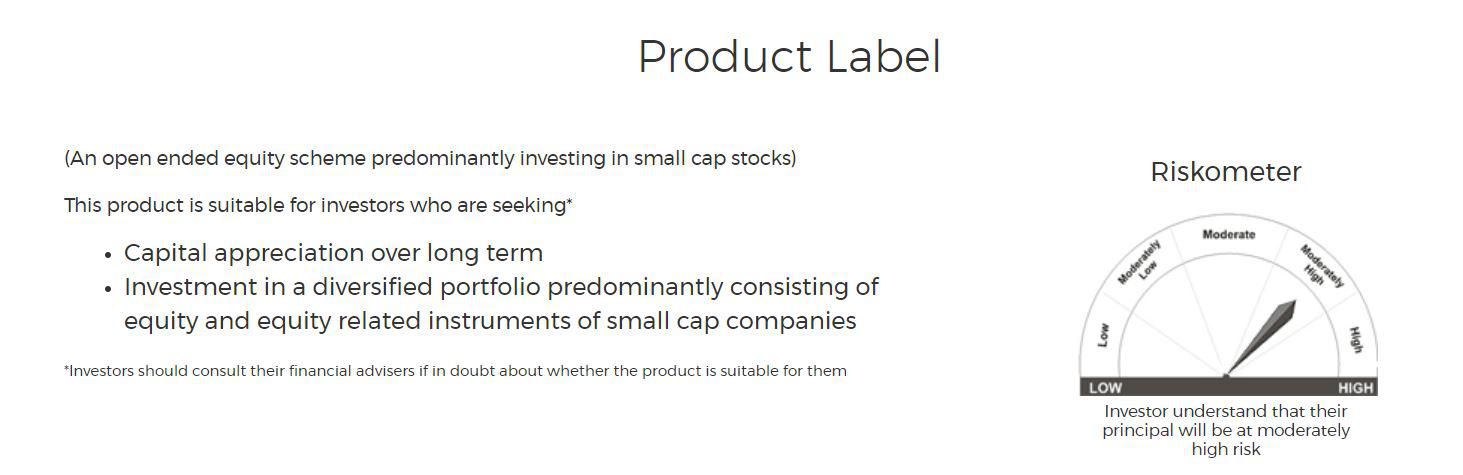
Small cap funds: SEBI defines small cap funds as “An open ended equity scheme predominantly investing in small cap stocks.” Small cap funds are a subcategory of equity mutual funds where of the total assets, a minimum of 65 percent is invested in equity and equity related instruments of small cap companies.
Multicap funds: According to SEBI, a multi cap fund “is an open ended equity scheme that invests across large cap, mid cap, small cap stocks” Multi cap funds must invest a minimum of 65 percent of its total assets in stocks of large, mid and small cap companies.
Large & Midcap fund: As per SEBI’s norms, a large & midcap fund of its total assets must make a “Minimum investment of 35 percent in equity & equity related instruments of large cap companies and ta minimum investment of 35 percent in equity & equity related instruments of mid cap stocks”.
Difference between mid cap and small cap funds
| Parameters | Mid cap funds | Small cap funds |
| Market capitalization | Mainly invests in companies having a mid market cap | Mainly invests in companies having a small market cap |
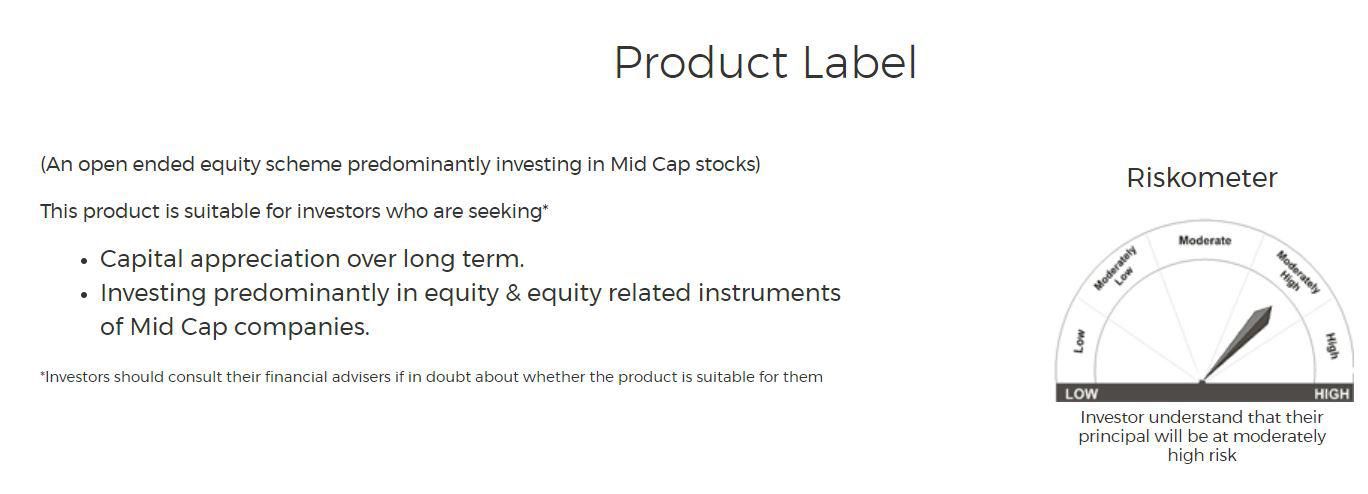
| Risk profile | Moderately High | Moderately high |
| Asset allocation | Of the total assets, a mid cap fund must invest a minimum of 65 percent in equity and equity related instruments of mid cap companies | Of the total assets, a small cap fund is supposed to invest a minimum of 65 percent in equity and equity related instruments of small cap companies |
| Returns | Returns are subject to market risk and are never guaranteed | Returns are subject to market volatility and are never guaranteed |
| Who may consider investing | Investors with a moderately high risk appetite may consider investing in mid cap funds | Young investors willing to give their investment portfolio an aggressive touch may consider investing in small cap funds |
Remember small cap and mid cap funds both invest heavily in equity and hence only if you are willing to risk your finances with equity investments, you may consider investing in these funds. Also, equity funds are best suited for investors with a long term investment horizon. So only if you are willing to remain committed for that long you may look at these funds for investment. Equity markets are highly volatile in nature and unexpected market fluctuations may put your investments in jeopardy. Hence if you are investing in equity funds like small cap or mid cap, make sure that you have an investment horizon of at least 7 years and above. This way you do not have to worry about daily market fluctuations and also benefit from compounding. On the contrary, if you really want to benefit from compounding you may start investing in mid cap or small cap funds via SIP.
Systematic Investment Plan is an easy and hassle free approach for systematic investing. You can continue investing in mid cap and small cap funds from the comfort of your smartphone or laptop with a decent internet connection. You can invest in mutual funds via SIP through the website of any AMC or a third party app. All you need to do is instruct your bank and every week on a predetermined date a fixed amount is debited from your savings account and transferred to your mutual fund. You can start investing with a small amount and top up your SIP amount gradually depending on the performance of the fund. SIP paves way for rupee cost averaging too.
You may invest in these funds via SIP to meet long term financial goals. If you are new to investing, feel free to seek the help of a financial advisor.
Axis Small Cap Fund
An open ended equity scheme predominantly investing in small cap stocks
Axis Mid Cap Fund
An open ended equity scheme predominantly investing in mid cap stocks
Mutual Fund Investments are subject to market risks, read all scheme related documents carefully.
Calculator
View All








Mutual fund investments are subject to market risks, read all scheme related documents carefully.
Copyrights  2020. All rights reserved Axis Mutual Fund.
Privacy | Terms | Disclaimer | Sitemap