









Key Reasons to Choose A Tax Saving Fund (ELSS)


(As on date 04th Mar, 2020)
Tax saving season is round the corner, and by now you must have received an email from your employer requesting you to submit investment proofs. The problem with the young generation is a lot of them wait until the last moment to invest in tax saving instruments to save taxes. And in such vulnerable moments, there is a possibility that you might miss out on certain tax saving investment opportunities which might have been more lucrative than the ones you invested in.
If you are someone with moderately high risk appetite and wish to invest in equities with the hope of earning growth, you may consider investing in Equity Linked Saving Scheme or ELSS. ELSS is the only mutual fund scheme that comes with a tax benefit. To find out more on ELSS, read further:
What is Equity Linked Saving Scheme?
ELSS is an open ended mutual fund that primarily invests in equity and equity-related instruments. Like mentioned earlier, it is the only mutual fund under Section 80C which comes with a tax benefit. An investor can invest up to Rs. 1.5 lakh* per fiscal year and claim tax deduction for the same from his / her gross taxable income.
Here are a few reasons why you should consider investing in ELSS:
- ELSS has a short lock-in: Of all the tax saving instruments ELSS probably the shortest lock in period of three years. This means you cannot redeem your ELSS investment for at least three years. Three year lock-in allows investments to grow with time, and this might actually benefit ELSS fund holders in the long run. Also, if the ELSS fund you invested in isn’t performing well, you may discontinue investing in the fund and switch to another fund after the lock-in period.
- ELSS has tax benefit: Section 80C of the Indian Income Tax Act, 1961 allows investors to claim deductions of up to Rs. 1.5 lakhs per fiscal year through ELSS investments. Hence, ELSS investments not only offer investors an opportunity to seek long term capital gains, but it also has tax benefit.
- ELSS investors might benefit from compounding: Investors with a long term investment objective usually tend to benefit from compounding. If you remain invested for the long run, your ELSS investment, which might seem like a small investment amount at present, has a chance of gradually multiplying with time due to the power of compounding, hence benefiting the investor.
- ELSS investment offer SIP option: SIP or Systematic Investment Plan is a powerful tool which investors can make the most out of. With SIP, all an investor has to do is instruct their bank and every month on a predetermined date, a fixed amount is debited from their bank account and transferred to their ELSS fund. SIP can be done through electronic and hassle-free process which may help investor inculcate the discipline of investing regularly.
Like all investments, ELSS has its own merits and demerits. Hence it is advisable that investors try to align their financial goal with their risk appetite and investment horizon. If necessary, seek the help of the financial advisor who might help you with tax planning and allow you to make an informed investment decision.
Now that you are aware of what ELSS is and how it functions, planning on some investment? If so, you might want to consider Axis Long Term Equity Fund to help you get rid of your tax woes.
*As per the present tax laws, eligible investors (individual/HUF) are entitled to deduction from their gross income of the amount invested in Equity Linked Saving Scheme (ELSS) up to Rs.1.5 lakhs (along with other prescribed investments) under section 80C of the Income Tax Act, 1961. Tax savings of Rs. 46,800 mentioned above is calculated for the highest income tax slab. Investors are advised to consult his/her own Tax Consultant with respect to the specific amount of tax and other implications arising out of his/her participation in ELSS.
Axis Long Term Equity Fund
(An open ended equity linked saving scheme with a statutory lock in of 3 years and tax benefit)
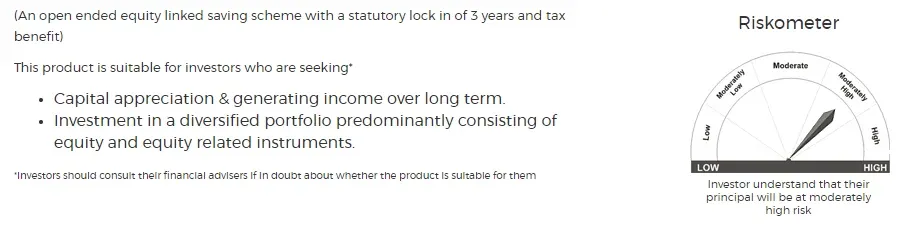
Mutual Fund Investments are subject to market risks, read all scheme related documents carefully
Calculator
View All








Mutual fund investments are subject to market risks, read all scheme related documents carefully.
Copyrights  2020. All rights reserved Axis Mutual Fund.
Privacy | Terms | Disclaimer | Sitemap