









Mutual Fund Investment for Foreign Education


India is one of the top countries across the globe that has its younger generation enrolling for overseas education. That is quite evident considering the country houses a population of over 1 billion, making it the second largest city populated country after China. Also, a large percentage of the population in India is of youngsters with an average age of 25 years and below. Studying abroad is a dream for a lot of Indian students, and every year the country witnesses thousands of youngsters leaving their motherland to pursue their dream. For many individuals, studying abroad is not just about seeking foreign education, for them it is a once in lifetime opportunity to explore another country. When you are in another country on your own, it teaches you a lot. Although the sense of freedom and ability to do whatever you want may coexist, one might also have to face several challenges. For example, may leave the country with sheer excitement but once you reach the foreign land, settling in might become a task in itself. Secondly, a lot of people feel homesick and dealing with such kind of emotional baggage can really crush an individual. But still, the idea of living and studying in a foreign country is exhilarating and also gives the parents of these children a sense of proudness.
Why foreign education is popular among young Indians?
Also, studying abroad has its own perks. You learn the foreign lingo. Plus your communication skills are put to test and when you return, your language skills, especially your vocabulary have definitely improved. Another good reason why overseas education in India is popular because when these students come back to India, a plethora of opportunities await them. A foreign bachelor’s degree, an MBA or anything equivalent has a lot of weightage here in India and these students are surely a choice of preference employers across all spectrums.
Also, studying overseas might broaden your horizon in ways you cannot imagine. Students will get exposure to extra curricular activities that a lot of universities might not even have a clue about here in India. Also, when you go overseas for education or higher studies, you make friends with students across the world who come there just like you. Having an international group of friends is not a bad idea at all, you get exposure to different cultures, cuisines, you learn new words in different languages, learn new lingos, jargons, etc. And honestly speaking, the competition to get into top institutes is much intense here in India than anywhere else. Students have to rigorously prepare for entrance exams. Preparation for such exams requires a lot of discipline and one needs to be mentally and emotionally strong as well. Plus you have to beat lakhs of other students to get through the next round that consists of GD (group discussion). One needs to prove their caliber and convince supervisors that they hone leadership skills if they want to qualify for the final round which is the personal interview.
This may or may not be followed by global universities. But do you know where the real competition lies when it comes to going abroad for foreign education? One has to worry about getting an education loan and needs to be financially equipped if they want to live and study in a foreign country for two to three years.
Bearing expenses of children’s overseas education
As parents, we want to make sure that our child gets everything. They mean the world to us and we want to give them everything that we weren't able to get. Be it clothes, entertainment, or overseas education. Every parent wants to make sure that their child receives the best quality of education so that they can get high paying jobs and lead a better life. But looking at the current market situation and the value of rupee reaching new lows, some people might find sending their kids abroad for studies a bit difficult. Because of this. The purchasing power of rupee has diminished, and the fluctuating exchange rates might take the expenses of your child’s overseas education to an unexpected high. Inflation is another big hindrance for every economy. For example, if a foreign MBA costs anywhere around Rs. 25 lakhs to Rs. 30 lakhs currently, the costs of the same MBA is bound to double in the coming 10 to 15 years. Also, getting a loan from the bank can be a real pain sometimes and if your application is rejected, it would just kill the desire and ambition of your child.
A low inflation rate may not impact a currency’s exchange rate but no one can predict at which rate the inflation might progress and hence, our currency’s exchange rate is under constant pressure of hitting new lows. A country’s economic growth and stability is not in our hands and as we make efforts to change our status from a developing country to a developed country, no one knows how many years it will take for that change to actually happen. The rupee depreciation might surely affect your plans of sending your children abroad for overseas education and hence you need to start planning early. Also, if you take an education loan due to some unfortunate circumstances and have to withdraw from your course abruptly, you still have to pay college fees and pay back the bank you took the loan from. This might just complicate and worsen your financial stance. Hence, it is always better that you have a backup plan of having some money allotted just for your child’s foreign education so that you do not have to completely be dependent on a bank to finance their education.
And if you want to make sure that you have enough money in the kitty reserved for your kids, you need to be effective with financial planning.
Plan well in advance
If you are expecting a child, or in the process of family planning or have already welcomed a new baby in your family recently, this might be an ideal time to start saving a portion of your monthly earnings for your child’s future. The dollar’s value is increasing, making the value of our rupee depreciate. In such an economy, one cannot wait till their attains maturity and then start saving because they want to pursue higher education abroad. It might be too late if you wait till the last moment. You need to start building a corpus for your child’s education at an early stage. If you wish you may even consider mutual fund investments for securing your child’s future. But you need to plan your investments smartly and consider only those investments schemes which may potentially help you get near your goal.
But before you go ahead and make the decision of investing in child investment plans, you need to make sure that you set a long term financial goal. Also, having a long term investment horizon is equally essential for equity investments like mutual funds need time to grow. Also, mutual fund investments carry a certain amount of risk. So you need to understand your risk appetite and keep your existing liabilities in mind as well before making the actual investment. Also, keeping a long term goal is essential because you are going to need a large corpus for your child’s education, something which cannot be achieved through short term investments. When you plan equity investments for the long run, you may even be able to beat market volatility and inflation. That’s because unlike short term investments, long term investments are less likely to get affected by the daily market fluctuations.
Invest in a child plan via SIP
If you plan to invest in a mutual fund for securing funds for your child’s future education, there are two ways in which you can invest - you can either make a lumpsum investment or you can invest in mutual funds via SIP.
Systematic Investment Plan or SIP, is an easy and hassle free investment approach which might be able to help you reach your financial goal. With SIP, all one needs to do is instruct their bank, and every month on a fixed date, a predetermined amount is deducted from your savings account and electronically transferred to the mutual fund. This disciplinary and systematic investment approach might become the key factor in being able to help you achieve your financial goal. Also, if you continue investing in mutual funds via SIP, you will benefit from compounding. SIP has the power of converting small principal investment amounts into commendable corpuses. To start investing in mutual funds through SIP, you do not need to have a large capital for initial investment. You can start with investing a small portion of your monthly earnings in SIP and increase the monthly investment amount depending on the performance of the mutual fund scheme.
With SIP, every month’s investment is like a new investment. You are allotted mutual fund units in proportion to the investment amount and depending on the fund’s existing net asset value (NAV). So for example, if you started an SIP of Rs. 1000 and this month’s NAV is 10, you will be allotted 100 mutual fund units. If the market falls next mortgage and this leads to the fall in the NAV of your mutual fund to 5, you will be allotted 200 units. Similarly, if the NAV of the fund goes up in the following month, you will be allotted lesser units. This is referred to as rupee cost averaging.
So if you are planning to invest in a solution oriented mutual fund scheme for building a corpus for your child’s overseas education, you may consider investing in Axis Children’s Fund.
Plan your child’s future with Axis Children’s Fund
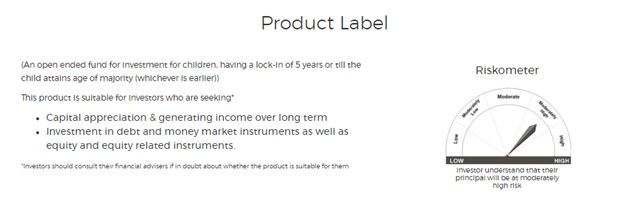
Axis Children's Fund is an open ended fund for investment for children, that comes with a compulsory lock-in of 5 years or till the child attains age of majority (whichever is earlier). The investment objective of the scheme is to generate income by investing in debt and money market instruments along with long-term capital appreciation through investments in equity & equity related instruments. However, there is no assurance or guarantee that the investment objective of the scheme will be achieved. The scheme does not assure or guarantee any returns.
Benefits of investing in Axis Children’s fund
- Axis Children's Fund helps you invest in the name of a child for the future of the child, say education, marriage, or any other long term purpose.
- Not just parents but anyone can gift such an investment to a minor in the name of the minor.
- Asset Allocation Benefit - Money is invested in equities; therefore, it holds great potential for long-term wealth creation. Since a portion of money is also invested in debt and money market instruments, it gives the much-needed cushion in terms of relatively less volatility.
- Investing in Axis Children’s Fund might inculcate the discipline of thinking from a long term perspective.
Now that you are aware about how you might be able to secure your child’s future through Axis Children’s Fund, plan on investing? But before you go ahead and make the actual investment, make sure that you align your investments with your financial goal, investment horizon, existing liabilities and risk appetite. Investing in mutual funds is a long journey and hence you need to be patient and remain dedicated to your investments. For giving your investments a disciplinary approach you may start an SIP and take advantage of tools like computing and rupee cost averaging. You may continue investing in the child investment plans of your choice via SIP till your investment objective is achieved. Remember that you are investing to secure your child’s future and hence need to be careful with how you spread investments and keep a diversified portfolio. If you are new to mutual fund investments and need assistance, you can always seek the help of a financial advisor.
Axis Childrens Gift Fund
An open ended fund for investment for children, having a lock-in of 5 years or till the child attains age of majority (whichever is earlier)
Mutual Fund Investments are subject to market risks, read all scheme related documents carefully.
Calculator
View All








Mutual fund investments are subject to market risks, read all scheme related documents carefully.
Copyrights  2020. All rights reserved Axis Mutual Fund.
Privacy | Terms | Disclaimer | Sitemap