









How are Dynamic Bond Funds Different from Short Duration Funds?


(As on date 18th Jan, 2021)
Mutual funds are categorized by SEBI to help investors make an informed investment decision. Although most people think that equity schemes are the only type of schemes available for investment, there are other schemes as well. Categories like debt schemes that invest in fixed income securities like debentures, company fixed deposits, call money, government bonds, , etc.
If you are someone who doesn’t wish to explore the equity markets and take that extra risk with your finances, you can always build and diversify your portfolio using debt schemes. As of now, under SEBI regulations, there are around 16 subcategories under debt schemes here in India. Today, we are going to focus on dynamic bond funds and short duration funds, both with fall under debt schemes.
Let us understand each of these schemes in brief and also try to find out the difference between these two:
What are dynamic bond funds?
If you are looking for a scheme to remain invested for at least three years or more, then you can consider investing in a dynamic bond fund. Over the years, due to falling interest rates on conservative investment avenues, mutual funds are gaining traction of conservative investors. Such investors, who are willing to explore new markets and carry a moderate risk appetite, they consider investing in dynamic bond funds. The duty of the fund manager managing a dynamic bond fund is to reduce risk and help the scheme yield better capital appreciation by buying and selling debt securities in accordance with the scheme’s investment objective.
What are short duration funds?
If you have a short to medium term investment horizon and looking for a low risk investment option, you can consider investing in short duration funds. These funds invest in fixed income securities like certificates of deposits, commercial paper and similar debt instruments that have a short maturity period.
What is the difference between dynamic bond funds and short duration funds?
Short duration funds may suit the requirements of those investors who have a short duration investment horizon of 1 year or more. On the other hand, investors with an investment horizon of 3 years or more can consider investing in a dynamic bond fund. Dynamic bond funds aim to generate capital appreciation over a medium term. A short duration fund on the other hand invests in high quality papers, thus aiming to generate stable capital appreciation with minimal risk. A short duration fund can act as an emergency fund because of its highly liquid nature. A short duration bond fund on the other can be considered for achieving short duration goals like vacation planning or purchasing a new car.
Axis Dynamic Bond Fund
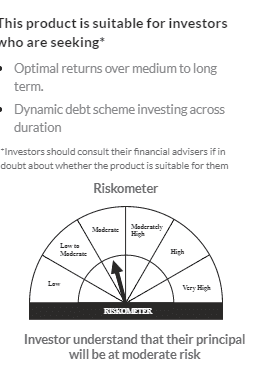
If you want to invest in a dynamic bond fund, you can consider investing in Axis Dynamic Bond Fund. Axis Dynamic Bond Fund is an open ended dynamic debt scheme investing across duration. The investment objective of the fund is to generate optimal returns while maintaining liquidity through active management of a portfolio of debt and money market instruments.
What are the benefits of investing in Axis Dynamic Bond Fund?
- Axis Dynamic Bond Fund has the capability to invest in the best ideas in the fixed income market at any given point in time.
- The Axis Dynamic Bond Fund aims to maximize capital gains with income generation and enhanced returns by utilizing volatility.
- It is suitable for investors who are looking to generate optimal returns over the long term but averse to taking substantial risks in their portfolios.
- Axis Dynamic Bond Fund is ideal for investors looking for long term allocations (minimum 3 years) with significantly lower risk than equity investments.
Axis Short Duration Fund
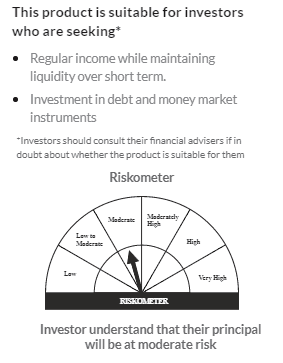
Those seeking investments in short duration funds can consider investing in Axis Short Duration Fund. Axis Short Duration Fund is an open ended short duration debt scheme investing in instruments such that the Macaulay duration of the portfolio is between 1 year to 3 years. The investment objective of Axis Short Duration Fund is to generate stable returns with a low risk strategy while maintaining liquidity through a portfolio comprising of debt and money market instruments. However, there can be no assurance that the investment objective of the scheme will be achieved.
What are the benefits of investing in Axis Short Duration Fund?
Here are some of the ways how investments in Axis Short Duration Fund may prove beneficial for investors:
- Short erm funds invest in shorter duration debt and money market instruments which give the potential to generate relatively stable returns with comparatively lesser risk
- It is a short durationdebt fund investing in high quality papers which allows participation in short duration part of the curve which is a large and highly traded space
- Axis Short Duration Fund may prove to be beneficial for someone with a minimum investment horizon of one year
Now that you know the difference between short duration bond funds and dynamic bond funds, where are you planning on investing? No matter where you invest, make sure that you keep your mutual fund portfolio diversified and invest only in those funds that hold the potential to help you achieve your financial goals.
Axis Short Duration Fund
An open ended short duration debt scheme investing in instruments such that the Macaulay duration of the portfolio is between 1 year to 3 years
Axis Dynamic Bond Fund
An open ended dynamic debt scheme investing across duration
Mutual Fund Investments are subject to market risks, read all scheme related documents carefully.
Calculator
View All








Mutual fund investments are subject to market risks, read all scheme related documents carefully.
Copyrights  2020. All rights reserved Axis Mutual Fund.
Privacy | Terms | Disclaimer | Sitemap