






Difference Between Large Cap, Mid Cap and Small Cap Funds


The Indian investor is blessed with a plethora of investment schemes to choose from. However, those who are new to investing may find it difficult to navigate through these endless scheme options and choose one that ticks all the right boxes for them. But those who are good with financial planning, for them charting out an investment plan doesn’t seem that difficult. That’s because individuals who are good with financial planning, they are equally good at money management. The problem with millennials today is that most of these individuals are more inclined towards spending, rather than saving like their old folks. The reason most of us are able to lead a stable life is because our parents were hard on saving and investing rather than splurging unnecessarily. But unfortunately, very few have been able to carry forward this habit.
It is easy to get lured by products and services these days especially because almost every scheme has a discount tag to it. But what young earners fail to realize is that they are spending more than they should be, and most of the time these expenses are unnecessary. Money management is nothing but being able to manage your life with whatever you earn. Remember that your outflows should not get out of control and that your inflows should be able to suffice your primary needs. People have the tendency to focus on wants rather than needs, and this is why most of them lack money management. This leads them to turn to their credit cards at the end of the month.
If you really want to get out of this circle and see yourself becoming financially stable in near future, you may have to learn to manage your expenses. All one has to do is make some minute changes in their lifestyle and soon they might have some cash which they can save and invest for future. Remember that you are going to need more money at later stages in your life than you need now, and hence while making a list of your short term and long term financial goals, you may have to consider investing a financial scheme for the long run. Coming back to managing expenses, you can start by cutting down several unnecessary habits like frequenting fancy restaurants. Instead you can check out for a cookery show online and try one of these fancy meals at home. Basically, you will be doing yourself a favor and saving a lot of money. Another way you can save some cash is by opting for a public transport like local train or bus to travel to work every day rather than using your personal vehicle. The fuel prices are not going down any time soon. Instead, year after year the prices of petrol and diesel are reaching new heights. In such a scenario using your personal vehicle to travel to work every day may not be a sensible idea. You can get a bus or train pass and save at least a couple of thousand rupees every month.
Financial planning and money management go hand in hand. Once, you have some amount in your kitty that you can invest, you need to chart out a financial plan. Financial planning is nothing but understanding your short term and long term financial goals. It is necessary that investors prioritize their goals so that they have a clear mindset while making an investment decision. However, individuals are requested to keep their financial goals realistic. It is better that they do not mimic the goals of their peers or colleagues and set idealistic goals which might be able to achieve in the long run. Every individual’s goals vary depending on certain aspects like their age, income, liabilities, existing investments, etc. For example, an individual might be investing to build a retirement corpus to secure their golden years. Others might want to invest in a scheme to secure their child’s future. To build a large corpus, having a long term investment horizon is essential. Also, patience is something every investor should have in them if they really want to witness their investments grow. You have strived hard to earn and save that money. When you invest, it’s the job of the money to do the hard work for you. All one has to do is remain committed to their investments and continue investing till their investment objective is achieved.
However, investors should realize that these investments schemes out there, each of them carry a different risk profile. Hence, it is better if individuals are first able to understand their risk appetite before making the actual investment. A risk appetite is an individual’s ability to bear financial risk with the hope of fetching some gains at some point of time in future. There are some individuals who carry zero risk appetite. For such individuals, it is better that they stick with schemes that offer fixed interest rates. The only downside here might be that these schemes generally offer low interest rates, which is why one may or may not be able to get closer to their ultimate financial goal by solely investing in them.
There are some investors who wish to give their investment portfolio a slightly aggressive touch and do not mind taking risk. Investors who seek market linked returns may consider the option of investing in mutual funds.
What are mutual funds?
Over the past few years, mutual fund investments have gained traction among seasoned as well as new age investors. Mutual funds have found their way to the portfolio of the Indian investor because of the kind of diversification they offer. What fund houses do is that they collect money from investors sharing a common investment objective and invest this pool of funds across the Indian economy. This capital raised through various investors with a common objective is referred to as a mutual fund.
The money collected on behalf of the investors is invested across multiple asset classes including equity, debt, corporate bonds, treasury bills, government securities, certificate of deposits, etc. Mutual fund investors receive shares in the form of units in quantum with the invested amount and depending on the fund’s existing NAV.
SEBI, the regulatory body in India outlines mutual funds as, “a mechanism for pooling the resources by issuing units to the investors and investing funds in securities in accordance with objectives as disclosed in the offer document.
Investments in securities are spread across a wide cross-section of industries and sectors and thus the risk is reduced. Diversification reduces the risk because all stocks may not move in the same direction in the same proportion at the same time. Mutual fund issues units to the investors in accordance with the quantum of money invested by them. Investors of mutual funds are known as unitholders.
The profits or losses are shared by the investors in proportion to their investments. The mutual funds normally come out with a number of schemes with different investment objectives which are launched from time to time. A mutual fund is required to be registered with Securities and Exchange Board of India (SEBI) which regulates securities markets before it can collect funds from the public.”
What is market capitalization?
To put it in simple words, market capitalization is the value of a company that is traded on the stock market, calculated by multiplying the total number of shares by the present share price. Market capitalization can be further understood on the basis of this simple formula. It is commonly referred to as a market cap where ‘cap’ stands for capitalization.
| Market cap of a company= Current market price of one share *Total number of outstanding shares |
Here’s an example to help you understand market capitalization in a simpler way:
If KIA Motors’ current value of one share is Rs. 5000, and the total outstanding publicly traded shares the company owns is 1 crore, then the company’s market cap value is Rs.5000 * 1 crore shares which equals to Rs. 5000 crores.
The market capitalization of a company may or may not remain the same. That’s because the per-share value of the publicly traded company keeps fluctuating and so may its market capitalization. In a similar way, depending on purchase/sale, the number of outstanding shares may change over a period of time.
What are large cap funds?
Large funds are those funds that invest in top 100 companies with full market capitalization. As per SEBI’s norms, a large cap fund must invest 80 percent of its total assets in equity and equity related instruments of companies with large market capitalization. These companies are supposed to be reputable, trustworthy and well established market players. A lot of people consider investing in large cap funds safe, but this may or may not prove to be true in every circumstance.
Market caps are defined as per SEBI regulations as below:
a. Large Cap: 1st -100th company in terms of full market capitalization.
b. Mid Cap: 101st -250th company in terms of full market capitalization.
c. Small Cap: 251st company onwards in terms of full market capitalization. Past performance may or may not be sustained in the future. Stock(s) / Issuer(s)/ Top stocks with increased or decreased exposure mentioned above are for the purpose of disclosure of the portfolio of the Scheme(s) and should not be construed as recommendation to buy/sell/ hold. The fund manager(s) may or may not choose to hold the stock mentioned, from time to time. Data As on 31st July 2020.
What are mid cap funds?
Mid cap funds are those mutual funds that invest in companies with medium market capitalization. As per SEBI, a mid cap fund must invest a minimum of 65 percent of its total assets in equity and equity related instruments of mid cap companies. Mid cap companies fall between large cap and small cap companies in terms of market capitalization. Funds that invest in stocks of mid cap companies are referred to as mid cap funds. They are considered to be less volatile than small cap funds but more volatile than large cap funds (however, this may or may not prove to be true in every situation).
What are small cap funds?
Small cap mutual funds are a subcategory of equity mutual funds where of the total assets, a minimum of 65 percent is invested in equity and equity related instruments of small cap companies. Funds that invest in company stocks of companies with small market capitalization are referred to as small cap funds. Since small cap funds invest in companies with small market cap, investing in these funds is considered to be of greater risk (however, this may or may not prove to be true in every situation).
What is the difference between large cap, mid cap and small cap funds?
| Parameters | Large cap funds | Mid cap funds | Small cap funds |
| Market capitalization | These funds invest in stocks of companies with large market cap | These funds invest in stocks of companies with medium market cap | These funds invest in stocks of companies with small market cap |
| Asset allocation | A large cap fund of its total assets must invest a minimum of 80 percent in equity and equity related instruments of large cap companies | Of its total assets, a mid cap fund must invest a minimum of 65 percent in equity and equity related instruments of mid cap companies | Of the total assets, a minimum of 65 percent is invested in equity and equity related instruments of small cap companies |
| Risk profile | Might be less riskier than small and mid cap funds but returns are never guaranteed | Might be less riskier than small cap funds but returns from these investments are never guaranteed | Investing in small cap funds may offer a riskier profile as compared to large and mid cap, but here too returns are not guaranteed |
| Returns/capital gains | Returns are subject to market risks | Returns are subject to market risks | Returns are subject to market risks |
| Might be suitable for | Investors with some risk tolerance may consider investing in large cap funds. That doesn’t make large cap fund investments any less riskier than mid or small cap funds | Investors having some amount of risk tolerance may consider investing in mid cap funds | Those who wish to give their investment profile a more aggressive approach may consider investing in small cap funds |
Now that you know the difference between large cap, mid cap and small cap funds, where are you planning on investing? No matter what you choose, make sure that you do some background check about the mutual fund that you invest in. Also, if you are entirely new to financial planning or mutual fund investments, make sure that you seek the help of a mutual fund advisor who might help you in making an informed decision.
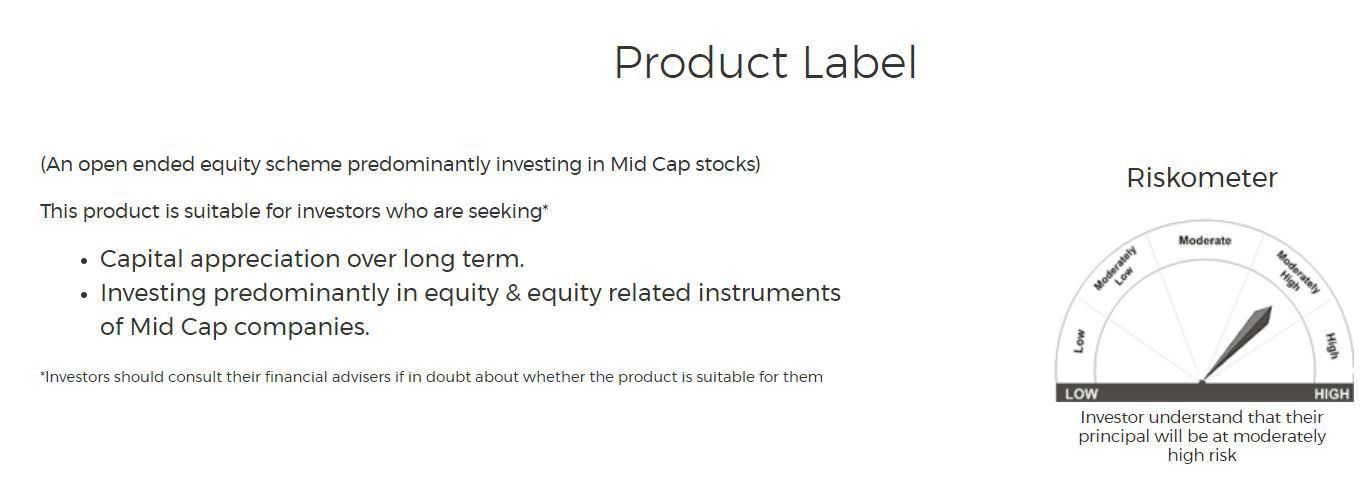
Axis Mid Cap Fund
An open ended equity scheme predominantly investing in Mid Cap stocks
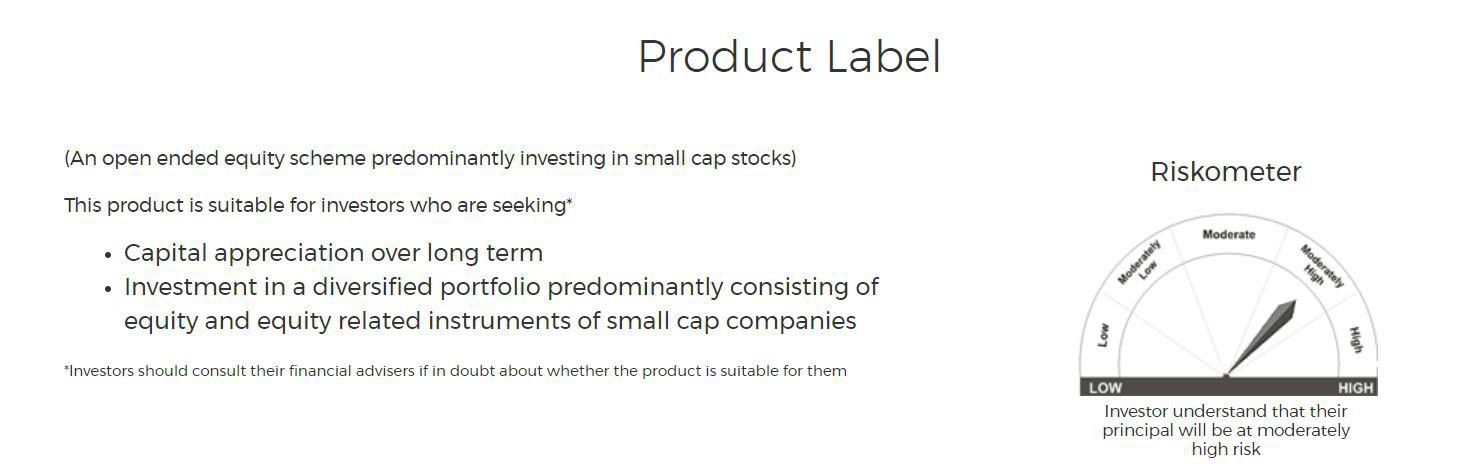
Axis Small Cap Fund
An open ended equity scheme predominantly investing in Small Cap stocks
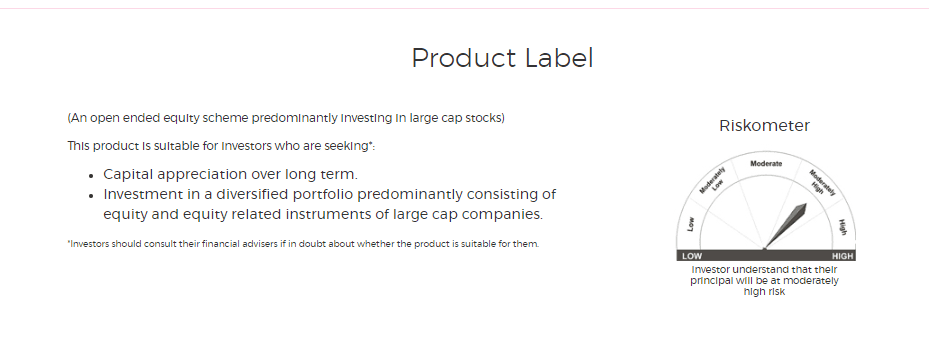
Axis Bluechip Fund
An open ended equity scheme predominantly investing in large cap stock
Mutual Fund Investments are subject to market risks, read all scheme related documents carefully.
Calculator
View All








Mutual fund investments are subject to market risks, read all scheme related documents carefully.
Copyrights  2020. All rights reserved Axis Mutual Fund.
Privacy | Terms | Disclaimer | Sitemap