









Benefits of Investing in Money Market Fund


The key to successful investing is optimum financial planning. Financial planning is essential as it gives you a clear idea about your expenditures and also allows you to invest smartly. If you learn how to manage money, you have already won half of the battle; the rest depends on how and where you spread your investments. The investment market is flooded with a plethora of investment products. This might become misleading, especially to new investors who do not have much knowledge about investing. Hence, to make things easier financial advisors usually ask individuals first to understand the primary reason behind their investment.
Are you investing to save taxes? Or are you looking to build a retirement corpus over the years? Or do you have short term goals like buying a new car or renovating your house? Having a defined financial goal always helps as now you have a realistic goal to achieve and might get a clear idea about how and where to invest your money. The next thing that follows is understanding your risk tolerance. That’s because investment tools like mutual funds carry a certain amount of risk which might not suit risk-averse investors.
Some mutual fund basics
Mutual funds allow young investors to invest in equities but what distinguishes them is the diversification that they offer. Mutual funds are a pool of professionally managed funds that invest in money market instruments like debt, call money, treasury bills, corporate/government bonds, etc. The money collected from investors is collectively invested across the Indian economy across various sectors. As a mutual fund holder, you receive shares in the form of units depending on the fund’s existing net asset value or NAV.
Mutual funds are further categorized based on several characteristics like investment strategy/objective, risk profile, fund size, asset allocation, etc. Although most investors tend to invest in equity mutual funds simply because of their high/rewards ratio, there are other mutual funds as well, which one may consider as an investment option.
Money market funds are debt funds that invest in marketable debt securities that have a maturity of up to 1 year. If you wish to find out more about money market funds, read on.
What are money market funds?
As the name suggests, a money market fund such as Axis Money Market Fund invests in short term debt and debt-related instruments like call money, treasury bills, government bonds that of AAA+ grade. These funds are usually considered by investors who have short term financial goals. However, there is no compulsion, and if you feel you may remain invested in a money market fund till your investment objective is achieved.
There are several reasons why money market funds are gaining popularity among investors of all age groups. Here are a few benefits of investing in money market funds:
Money market funds are professionally managed
Money market funds are actively managed funds. This means that the fund manager actively buys/sells securities in accordance with the fund’s investment objective. It is better to entrust your money at the hands of a professional fund manager, especially when you are new to mutual fund investing and do not understand market vagaries. The fund manager’s rich industry experience and expertise play a vital role in the fund’s market performance and hence investing in money market funds that are professionally managed might seem like a better option.
Money market funds offer liquidity
Money market funds are open-ended funds which do not have any lock-in period, unlike ELSS, an equity-oriented scheme that comes with a mandatory three year lock-in. Three year lock-in means you cannot redeem or withdraw your investments for at least three years. But in case of money market funds, no lock-in means you aren’t obligated to stay committed to these funds, and you can easily liquidate them in case of emergencies.
Diversification of risk
Money market funds invest in a diversified portfolio of assets. These funds invest in various money market securities, thus spreading investments across numerous debt assets. The rationale behind diversification is to ensure that the potential adverse effects of risk exposure to any one underlying asset of the money market fund remain limited.
You can invest in money market funds via SIP or lumpsum payment
Money market funds offer two investment options – SIP or lumpsum payment. If you want to purchase more mutual fund units at the fund’s existing NAV, you can make a lumpsum investment. But if you want to invest systematically over a period of time, you can opt for SIP. Systematic Investment Plan or SIP is a systematic approach that allows investors to make regular payments towards their money market funds. You may choose to invest at regular intervals in the money market fund via SIP until your investment objective is met.
We hope that the above article helps you learning and understanding the benefits of investing in money market funds. If you seek capital gains through mutual fund investments, you may consider adding money market fund to your investment portfolio.
Axis Money Market Fund
An open ended debt scheme investing in money market instruments
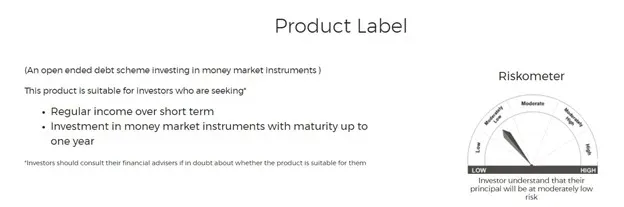
Mutual Fund Investments are subject to market risks, read all scheme related documents carefully.
Calculator
View All








Mutual fund investments are subject to market risks, read all scheme related documents carefully.
Copyrights  2020. All rights reserved Axis Mutual Fund.
Privacy | Terms | Disclaimer | Sitemap