









Axis Value Fund - FAQs: Learn how does it work, who should invest


Article as on 2nd Sept 2021
1) What is value investing? How is it different from other styles of investing?
Value Investing is focused on buying stocks which are trading at a valuation lower to their peers and the market. This focus on valuation as the determinant of selecting stocks is the chief attribute that sets apart Value investing from other investing approaches. However the challenge with this approach is that valuation does not tell anything about the fundamental strength of the company and value investing is affected by what are known as value traps (stocks that are cheap because they are fundamentally weak). Other forms of investing include quality and growth based that focus more on the fundamentals of the business.
2) How has value investing performed in the Indian markets?
In the Indian markets, over the long term we have seen quality and growth have provided the best outcomes as they reflect the fundamental strength of the businesses. Value has been highly volatile and prone to significant drawdowns and as a result has underperformed in the long term.
While over shorter periods Value strategies in India have seen periods of strong performance, these have typically been followed by large drawdowns and volatility and the gains have not sustained. We believe although a focus on valuations is important to remain true to style, low valuations may not always be the best investment case.
Such investments which may not have a fundamentally sound business or a quality characteristic to them are the prime reason for the large drawdowns seen in this style, we see them as value traps. As these companies may remain stagnated at a certain price and may not be able to re rate due to inherent company characteristics.
3) What is the strategy of Axis Value Fund? How is it different from other Value funds?
Axis Value Fund is an attempt by Axis AMC to create a differentiated strategy that we believe is smarter than traditional value investing and avoids its pitfalls. We believe that the singular focus on valuations that typical value strategies adopt is misguided since valuation has to be seen in context with the health and future potential of the business. Many low valuation businesses are in essence value traps – i.e. destined to remain cheap forever given their poor fundamentals.
As a result we believe that to work, the portfolio needs to use a more evolved process. The approach that Axis intends to use is to look for companies that combine strong fundamentals with reasonable valuations which we believe have the potential to generate long term wealth generation as the prospects of these business gets unlocked or as the economy/ sector goes through its growth phase. The process will incorporate filters to ensure that the fund does not allocate to companies with poor financial strength.
4) Why Is Axis AMC launching Value Fund? Does that mean that it is giving up on its quality positioning? Is it a reflection of the recent market performance?
As an AMC we believe if offering different strategies that have the potential to generate long term wealth for its investors. For its mainstream products, the AMC has created a unique process that relies on a strategy of investing in quality companies that have a long term sustainable growth potential. This approach has stood the test of time and generated significant alpha across funds since our inception.
Simultaneously the AMC has been looking at other strategies that can complement our core approach and also offer long term wealth potential. In that context, we have launched different strategies including the Quant fund (launched recently) and the Value fund that we are launching now. Given these are all long term strategies, the launch is not influenced by any recent market action.
5) Will the Axis approach to value focused on cyclical factors? How dynamic will the portfolio be?
Axis approach will incorporate ideas that will benefit from cyclical growth prospects. However this will only form a part of the portfolio and there can be other attributes to the stock that we invest in – including sector and company specific factors and stocks that can get re-rated due to certain triggers.
As such the approach is long term in nature and the portfolio is likely to remain stable. Stocks that get re-rated will be exited and replaced with other ideas.
6) What is Axis’ approach to the launch?
Given that Axis approach is significantly differentiated from typical value funds, we are looking at a boutique launch. We want to make sure that the investors that come into the fund at launch understand the differentiation and do not confuse it with a traditional value fund. Also we believe that it will be better to grow the fund organically over time as investors get to see the performance and portfolio and better understand what we are trying to achieve.
7) What kind of investors will this fund be most suitable for?
The fund is suitable for informed long term investors that are looking at a investing in a bouquet of complimentary equity strategies. We believe that given the unique nature of this approach, investors will need to invest in this with a long term (3-5 year) mindset in order to see it play out.
8) What are the NFO dates?
The scheme NFO will open on 2nd September 2021 and end on 16th September 2021.
9) What is the redemption cycle for this fund?
The fund redemption cycle will be a T+3 cycle i.e. from the date of redemption the AMC will endeavor to credit proceeds in 3 business days.
10) Are NRI investors from US and Canada permitted to invest in this scheme?
NRI’s are permitted to invest in India. For citizens of US & Canada, additional documentation with regards to proof of residence will be required along with the application.
11) How can I invest in this fund?
Investors can look to invest by way of lump sums, SIP’s or switch into the scheme.
• The minimum initial investment (purchase/switch-in) amount during the NFO period and on an ongoing basis would be Rs. 5,000 and in multiples of Re. 1/- thereafter.
• For additional Purchase, the minimum amount would be Rs. 1,000 and in multiples of Re. 1/- thereafter.
• Investors looking for SIP, can start with a minimum SIP of Rs 1,000/- and in multiples of Re. 1/- per month
There is no maximum investment amount during the NFO period or thereafter.
12) Who can invest?
The following persons are eligible and may apply for Subscription to the Unit(s) of the Scheme:
• Resident adult individuals either singly or jointly (not exceeding three) or on an Anyone or Survivor basis;
• Minor (as the first and the sole holder only) through a natural guardian (i.e. father or mother, as the case may be) or a court appointed legal guardian. There shall not be any joint holding with minor investments;
• Non-Resident Indians (NRIs) / Persons of Indian origin (PIOs) / Overseas Citizen of India (OCI) residing abroad on repatriation basis or on non-repatriation basis;
• Such other category of person(s) permitted to make investments and as may be specified by the AMC / Trustee from time to time.
For complete details refer scheme SID/KIM
13) What are the options for withdrawal of corpus available to the unit holders?
Lump sum Option
In case, the Unit holder wishes to redeem the entire / part of the units accumulated (units outstanding to the credit of Unit holder's folio/beneficiary account), he can exercise the option by submitting a redemption request.
Switch-Option
The Unit holder can switch entire / part of units accumulated to any other Investment Plan within the scheme or else switch to any other open-ended schemes of AXIS Mutual Fund. He can exercise the option by submitting a switch request. Investors are requested to note that on exercise of switch-option the amount which is switched-out shall be treated as redemption and shall be subject to Income tax provisions as applicable on such redemption. For Income tax purposes, holding period shall be calculated from the date of investment in respective investment Plans and not the date of original investment in the Scheme.
Systematic Withdrawal Plan (SWP) Option
Unit holders who wish to receive a fixed amount monthly or at pre-specified intervals from the accumulated corpus can opt for this option. Systematic Withdrawal Plan (SWP) would enable regular income at periodic intervals of time. Here the Unit holder can avail of the fixed amount at the applicable NAV.
Systematic Transfer Plan (STP):
A Unit holder holding units in non-demat form may enroll for the STP and choose to Switch on a daily, weekly, monthly or quarterly basis from this Scheme to another Scheme of AXIS Mutual Fund, which is available for investment at that time. The provision of 'Minimum Redemption Amount' of this Scheme and 'Minimum Application Amount' of the designated Transferee Scheme(s) shall not be applicable to STP.
14) What happens to the units of the Scheme in the event of death of the investor?
In the event of death of the single Unit holder or all Unit holder where the mode of holding is joint, the nominee or legal heir, (subject to production of requisite documentary evidence to the satisfaction of the AMC) as the case may be. In case of joint holdings, in the event of death of the first unit holder, the second holder becomes the first unit holder.
15) Can the units of the Scheme be held in dematerialized form?
Yes, applicants intending to hold units in dematerialized form will be required to have a beneficiary account with a Depository Participant (DP) of the NSDL/CDSL and will be required to mention in the application form DP's Name, DP ID No. and Beneficiary Account No. with the DP at the time of purchasing units. Please note that switch facility is not available for units held in Demat form. Further, in case of redemption, applications should be submitted to the respective Depository Participants.
16) Can I Demat / Remat the units after subscription into the scheme?
Yes. The conversion of units held in Physical form into Demat form or vice-versa should have to be submitted by you along with a Demat / Remat request Form to your respective Depository Participants.
17) Where can I check the NAV for the Investment Plan(s) of the Scheme?
Axis Asset Management Company Limited (Axis AMC) will calculate and disclose the first NAVs of the respective Plan(s) under the Investment Plan(s) of the Scheme within 5 Business Days from the allotment of units under its NFO. Subsequently, the NAVs will be calculated and disclosed at the close of every Business Day in the following manner:
i. Displayed on the website of the Mutual Fund (Mutual Fund)
ii. Displayed on the website of Association of Mutual Funds in India (AMFI) (www.amfiindia.com)
Product Labelling
| Fund Name | Riskometer | Product Labelling |
| Axis Value Fund (An open ended equity scheme following a value investment strategy) | 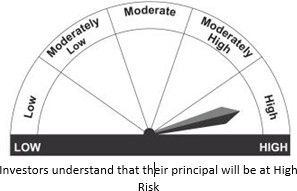 | This product is suitable for investors who are seeking*: |
*Investors should consult their financial advisers if in doubt about whether the product is suitable for them.
(The product labelling assigned during the New Fund Offer is based on internal assessment of the Scheme Characteristics or model portfolio and the same may vary post NFO when actual investments are made)
Disclaimer
Document produced on 31st August 2020. Past performance may or may not be sustained in the future. Sector(s) / Stock(s)
/ Issuer(s) mentioned above are for the purpose of disclosure of the portfolio of the Scheme(s) and should not be construed as recommendation. The fund manager(s) may or may not choose to hold the stock mentioned, from time to time.
Statutory Details: Axis Mutual Fund has been established as a Trust under the Indian Trusts Act, 1882, sponsored by Axis Bank Ltd. (liability restricted to Rs 1 Lakh). Trustee: Axis Mutual Fund Trustee Ltd. Investment Manager: Axis Asset Management Co. Ltd. (the AMC). Risk Factors: Axis Bank Limited is not liable or responsible for any loss or shortfall resulting from the operation of the scheme. This document represents the views of Axis Asset Management Co. Ltd. and must not be taken as the basis for an investment decision. Neither Axis Mutual Fund, Axis Mutual Fund Trustee Limited nor Axis Asset Management Company Limited, its Directors or associates shall be liable for any damages including lost revenue or lost profits that may arise from the use of the information contained herein. No representation or warranty is made as to the accuracy, completeness or fairness of the information and opinions contained herein. The AMC reserves the right to make modifications and alterations to this statement as may be required from time to time.
Investors are requested to consult their financial, tax and other advisors before taking any investment decision(s). The material should not be construed as issued by Government of India or any of its authority.
Mutual Fund Investments are subject to market risks, read all scheme related documents carefully.
Calculator
View All








Mutual fund investments are subject to market risks, read all scheme related documents carefully.
Copyrights  2020. All rights reserved Axis Mutual Fund.
Privacy | Terms | Disclaimer | Sitemap