









Are we headed for a consumption boom?


India, boasting a $5 trillion economy and ranking among the world's fastest-growing major economies with over 8% GDP growth in FY24. Fuelled by a growing middle class, escalating incomes, and a demographic dividend, India is poised to experience a considerable surge in consumer spending. But is the nation truly on the verge of a spending spree? Let's delve deeper to understand.
1. India's Demographic Powerhouse:
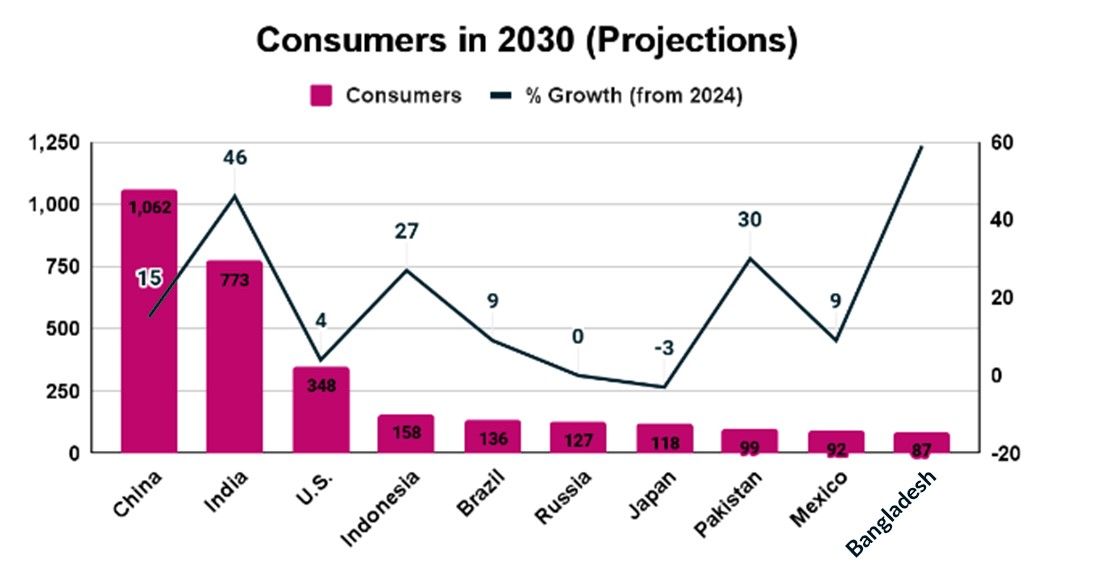
India has surpassed China to become the most populous country in the world, with approximately 65% of the population under the age of 35. While China also boasts a large population, its demographic advantage is reducing with an aging population. Conversely, India's youthful demographic provides a long-term edge in potentially sustaining consumption growth. Concurrently, per capita income has crossed the $2,000 mark, underscoring increased disposable incomes and heightened consumer spending capacity.

2. Double Boost: Rising Incomes and Urbanization:
India's GDP per capita is on the rise, and urbanization is picking up speed. By 2030, it is estimated that over 40% of Indians will reside in urban areas, compared to 34% in 2020. This urban shift usually means higher incomes, more jobs, and a bigger appetite for goods and services. Unlike China, the US, and the UK, where urbanization has maxed out, India's urban growth means there's still plenty of room for a boost in demand for everything from cars and electronics to healthcare and education.
3. Digital Revolution and Financial Inclusion
According to the 2024 State of India's Digital Economy report by the Indian Council for Research on International Economic Relations (ICRIER), India's digitalization is better than some developed countries, including the United Kingdom, Germany, and Japan. However, India ranks 12th in terms of digitalization among G20 countries when looking at individual users.
Over 100 million Gen Z consumers in India exhibit higher spending patterns compared to older generations. These young Indians are aspirational, tech-savvy, and eager to spend on desired products and experiences. Government initiatives like Digital India further accelerate this trend by improving internet connectivity and financial inclusion through schemes like Jan Dhan Yojana.
4. Consumption Trends and Market Potential
China's consumption boom was fuelled by its position as the 'world's factory,' with rapid export-led growth. While exports will undoubtedly play a role in India's story, the domestic market holds immense potential. This focus on internal consumption creates a more sustainable model in the long run. Additionally, India aims for a more balanced spending pattern across various sectors, unlike China's model that prioritized specific industries.
In 2023, India's consumption growth outpaced that of China, the US, and Germany. Household consumption in India nearly doubled over the past decade, reaching $2.1 trillion in 2023. The country is set to surpass Germany in 2024 and Japan in 2026 . By 2031, India's consumer market is expected to double , with significant growth in spending on food and financial services.
Private consumption makes up 70% of India's GDP, highlighting its importance to the economy. In comparison, private consumption accounts for 39.2% of China's GDP (Dec 2023), 67.5% in the US (March 2024), and an average of 63.3% in the UK from 1955 to 2024. The consumer market in India is evolving, with a growing demand for cars, electronics, luxury goods, healthcare, education, and tourism. New-age FMCG categories and premium products are also gaining popularity. The rise of the middle class and increasing brand consciousness are driving these exciting consumption trends.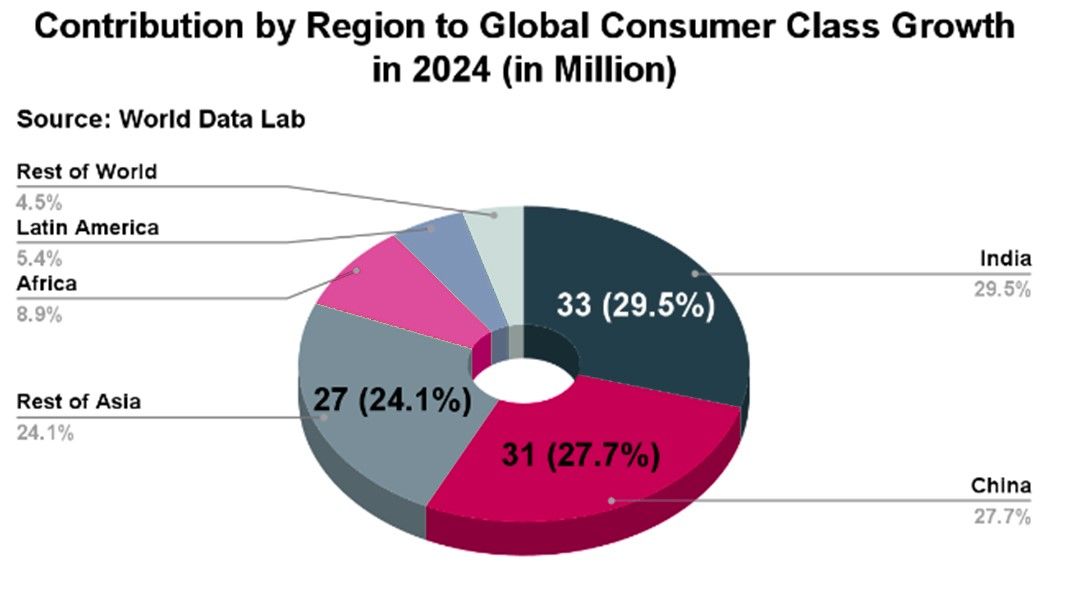
Conclusion
India’s demographics, rising incomes, and government initiatives all point towards a potential increase in spending power. While challenges exist, successfully addressing them will unlock the true potential of the Indian consumer, making it a major player in the global consumption landscape.
However, the trajectory of this boom is likely to be different from China's, with a more balanced approach to spending and a focus on rural markets. This unique consumption story presents exciting opportunities for businesses and investors who can cater to the evolving needs of the Indian consumer.
This document represents the views of Axis Asset Management Co. Ltd. and must not be taken as the basis for an investment decision. Neither Axis Mutual Fund, Axis Mutual Fund Trustee Limited nor Axis Asset Management Company Limited, its Directors or associates shall be liable for any damages including lost revenue or lost profits that may arise from the use of the information contained herein. No representation or warranty is made as to the accuracy, completeness or fairness of the information and opinions contained herein. The AMC reserves the right to make modifications and alterations to this statement as may be required from time to time. Mutual Fund Investments are subject to market risks, read all scheme related documents carefully.\\\\\\\\\\\\\\\\\\\\\\\\\\\\\\\\\\\\\\\\\\\\\\\\\\\\\\\\\\\\\\\\
Statutory Details: Axis Mutual Fund has been established as a Trust under the Indian Trusts Act, 1882, sponsored by Axis Bank Ltd. (liability restricted to Rs. 1 Lakh). Trustee: Axis Mutual Fund Trustee Ltd. Investment Manager: Axis Asset Management Co. Ltd. (the AMC). Risk Factors: Axis Bank Limited is not liable or responsible for any loss or shortfall resulting from the operation of the scheme.
Mutual Fund Investments are subject to market risks, read all scheme related documents carefully.
______________________
https://ithought.co.in/the-india-consumption-story/
https://www.moneycontrol.com/news/business/markets/india-to-outgrow-germany-japan-to-be-3rd-largest-consumer-market-by-2026-ubs-12717303.html#:~:text=India%20seems%20to%20be%20on,from%20%241.2%20trillion%20in%202013.
https://blog-pfm.imf.org/en/pfmblog/2024/05/india-decade-of-economic-resurgence
Calculator
View All








Mutual fund investments are subject to market risks, read all scheme related documents carefully.
Copyrights  2020. All rights reserved Axis Mutual Fund.
Privacy | Terms | Disclaimer | Sitemap