









7 Factors to Consider Before Choosing a Bluechip Fund


Mutual funds can be one of the investment tools which can help potential growth seekers get some returns. Mutual funds do have risk, but this doesn’t necessarily translate into inevitable losses. It all depends on the mutual fund you choose, the past track record of that mutual fund, the management that runs that mutual fund, the assets in which the fund invests, and so on and so forth. It also depends on your investment objective and the mutual fund you decide to invest in, to meet your financial goal.
Investors are generally expected first to identify the core reason behind their investment. If you choose the right mutual fund that aligns with your investment strategy, you too stand a chance to gain some profits. If you manage to sync your financial goal with your risk appetite, investment horizon, your existing liabilities, and with your existing investments, you are likely to invest in a scheme that holds the potential to help your reach to your goal.
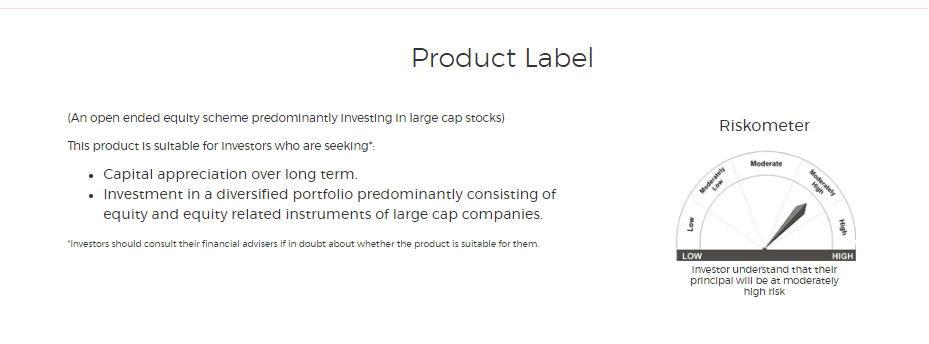
Investors seeking capital appreciation through equity investment can consider investing in an Axis Bluechip Fund. Axis Bluechip Fund invests in a diversified portfolio predominantly consisting of equity and equity related securities of Large Cap companies, including derivatives. Such companies are traded frequently and hence liquid and also less volatile as these stocks have proven track record, business models and capable enough to deliver long term consistent returns.
However, there are certain things to consider before investing in a bluechip fund. If you too are planning to invest in a bluechip fund, keep these things in mind:
1. Investment objective: This has to be the very first thought in an investor’s mind before considering investments not just in bluechip funds, but in any type of investment scheme. Do you have a short term, a medium term or a long term goal? Remember that the investment market is flooded with a plethora of schemes, and hence, it is necessary to choose a fund whose business strategy holds the potential to help you meet your investment objective. A bluechip fund is an equity oriented scheme. Investors with some risk appetite and a long term investment horizon can consider investing in a bluechip fund.
2. Track record of the fund: A bluechip fund with a proven track record can be considered for investment. However, investors should bear in mind that past or historical data of any fund doesn’t replicate it’s present or future. On the other hand, a fund with a good track record signifies its potential to handle money wisely, and one can only hope that it continues to do so.
3. Fund manager: A fund manager is someone who uses his/her years of experience in implementing a favorable business strategy for the fund. Each AMC has a fund manager, who uses their expertise to move money in the direction where there’s potential market growth. When you invest your money in a bluechip fund, you are indirectly entrusting your money in the mercy of expertise and experience of the fund manager.
4. Expense ratio: An expense ratio is nothing but the cost of owning a fund and it may have an impact on the returns provided by the scheme. You might invest in a fund that is continuously providing high returns, but remember the higher your profits, the higher will be the expense ratio. Hence you should also be aware of the expense ratio being charged by the bluechip fund.
5. Exit load: Exit load refers to the fee charged by an Asset Management Company from the investor during the time of the withdrawal or redemption of the fund units. If a bluechip fund has a higher exit load, it might be of disadvantage to the redeemer, especially if he/she is redeeming the units shortly after investments. However, if you remain invested for the long run, you may not have to worry about the exit load.
6. Investment strategy: Each fund has a unique business strategy implemented in order to beat the benchmark set for that fund. It is necessary to check the folio of the bluechip and understand where it’s investing majorly in. Asset management for any fund is equally essential, and one must be aware of the proportions in which the net assets are invested. This might help investors in understanding the business strategy implemented by the fund and can decide whether they want to invest in it.
7. Risk appetite: Remember that bluechip funds predominantly invest in equity and equity related instruments. Investments made in equity schemes are subject to market volatility. Hence risk averse investors who wish to keep their finances away from volatile market conditions should reconsider before investing in equity related schemes like bluechip funds.
We hope the above pointers are sufficient to help an investor understand how to approach their bluechip investments. Axis Bluechip Fund aims to outperform the benchmark with risk lower than the benchmark. If you have some risk appetite and wish for some growth, you can consider investing in Axis Bluechip Fund.
Axis Bluechip Fund aims to outperform the benchmark with risk lower than the benchmark.
Mutual Fund Investments are subject to market risks, read all scheme related documents carefully.
Calculator
View All








Mutual fund investments are subject to market risks, read all scheme related documents carefully.
Copyrights  2020. All rights reserved Axis Mutual Fund.
Privacy | Terms | Disclaimer | Sitemap