









5 Investing mistakes to Avoid in an ELSS Mutual Fund


(As on date 03rd June, 2020)
If you are one of those who go hunting for tax saving instruments at the final hour, it’s time to change the routine. Tax planning is as essential as financial planning. Why wait till your HR sends you a mail to submit your investment proofs when you can take your own sweet time and invest in a scheme that will not only help you save tax but also gives you an opportunity to seek some capital gains. If you are looking for an investment product which might not you give you an opportunity to get exposure to the market vagaries but also help you save some tax, you have come to the right place. Equity linked saving scheme or ELSS is the only mutual fund scheme that comes with a tax benefit.
If you wish to find out more about ELSS, continue reading:
What is Equity Linked Saving Scheme?
ELSS or equity linked saving scheme is an open-ended tax saving scheme that predominantly invests in equity and equity-related instruments. ELSS is the only mutual fund scheme that is eligible for tax benefits under Section 80C of the Indian Income Tax Act, 1961. ELSS comes with a mandatory lock-in period of three years which is probably the shortest among tax-saving instruments. You can invest up to Rs. 1.5 lakhs* per fiscal year in an ELSS fund and claim tax deductions for the same. However, being an equity-related scheme, ELSS investments are exposed to market volatility, and risk-averse investors shall reconsider investing in the tax saver fund.
However, if you have made up your mind and looking forward to investing in ELSS, here are few investment mistakes to avoid:
Investing in multiple ELSS schemes
In today’s internet age, it has become easy to buy ELSS online. Buying ELSS online is quite easy, and due to this, investors might end up investing in numerous ELSS funds offered by AMCs. Since ELSS offers investment opportunities in equity markets and also has a tax benefit, a lot of individuals might prefer investing in more than one ELSS fund. But remember that owning multiple ELSS funds may not be an ideal investment decision and on the contrary might affect an investor’s portfolio. When you invest in any particular fund, as an investor, it is your duty to keep a track on your investments at regular intervals. Investing in multiple ELSS funds means you need to keep a track certain aspects of the fund like its weekly/monthly performance, its benchmark, how the fund is performing compared to its peers and so on and so forth. For someone new to mutual funds and busy with their workaholic lifestyle, keeping a close tab on multiple ELSS funds might become a task in itself. Hence, one should try and avoid investing in multiple ELSS funds.
Invest in ELSS for only three years
Remember that ELSS is an equity linked scheme. Historically equity funds have proven to be a better investment choice for those who did not redeem their investments at a shorter time period. So although ELSS has a three-year lock-in, you need not redeem or withdraw your ELSS units immediately after the lock-in. The longer you hold onto your investments, the better the chances of beating market inflation arise. Also, if you invest for a longer time, you might even benefit from a power tool like compounding.
Making a last-minute ELSS investment
It is understandable that not a lot of taxpayers are aware of each and every tax-saving instrument available in the market. That’s because not everyone comes from a financial background and only think about investing in order to save tax. If you invest in ELSS at the last moment, you might have to make a lumpsum payment. This might not be ideal if you are looking at ELSS with a long term investment horizon. If you want to give your ELSS investment a systematic approach, you should consider investing in it through a systematic investment plan, familiarly referred to as SIP. A systematic investment plan is an easy electronic investment approach where one can continue investing in ELSS from the comfort of their smartphone or laptop and a decent internet connection. SIP allows you to invest at regular intervals every month. This may also inculcate the discipline of investing regularly in an individual. You may continue investing in ELSS via SIP app until your investment objective is achieved.
Invest only Rs. 1.5 lakhs in an ELSS fund
There is no upper limit for investing in an ELSS fund, and you can invest as much as you want or as much as your risk appetite allows you to. Remember that you can claim for tax deductions worth Rs. 1.5 lakhs, but invest as much as you want in an ELSS fund.
Invest only within you boundaries
ELSS investments are considered to be risky. During the market upheaval, one may even lose out on their initial investments. So it is better that you understand your risk appetite and do not invest more than your tolerance. You might need to have the appetite to bear losses and do not want to go bankrupt by overinvesting.
ELSS might be a viable approach for those seeking long term capital gains and also wanting to save taxes at the same time. You can take a look at Axis Long Term Equity Fund offered by Axis Mutual Funds if you consider investing in ELSS in future.
*As per the present tax laws, eligible investors (individual/HUF) are entitled to deduction from their gross income of the amount invested in Equity Linked Saving Scheme (ELSS) up to Rs.1.5 lakhs (along with other prescribed investments) under section 80C of the Income Tax Act, 1961. Tax savings of Rs. 46,800 mentioned above is calculated for the highest income tax slab.
Finance Act, 2020 has announced a new tax regime giving taxpayers an option to pay taxes at a concessional rate (new slab rates) from FY 2020-21 onwards. Any individual/ HUF opting to be taxed under the new tax regime from FY 2020-21 onwards will have to give up certain exemptions and deductions. Since, individuals/ HUF opting for the new tax regime are not eligible for Chapter VI-A deductions, the investment in ELSS Funds cannot be claimed as deduction from the total income.
Investors are advised to consult his/her own Tax Consultant with respect to the specific amount of tax and other implications arising out of his/her participation in ELSS
Axis Long Term Equity Fund
An open ended equity linked saving scheme with a statutory lock in of 3 years and tax benefit
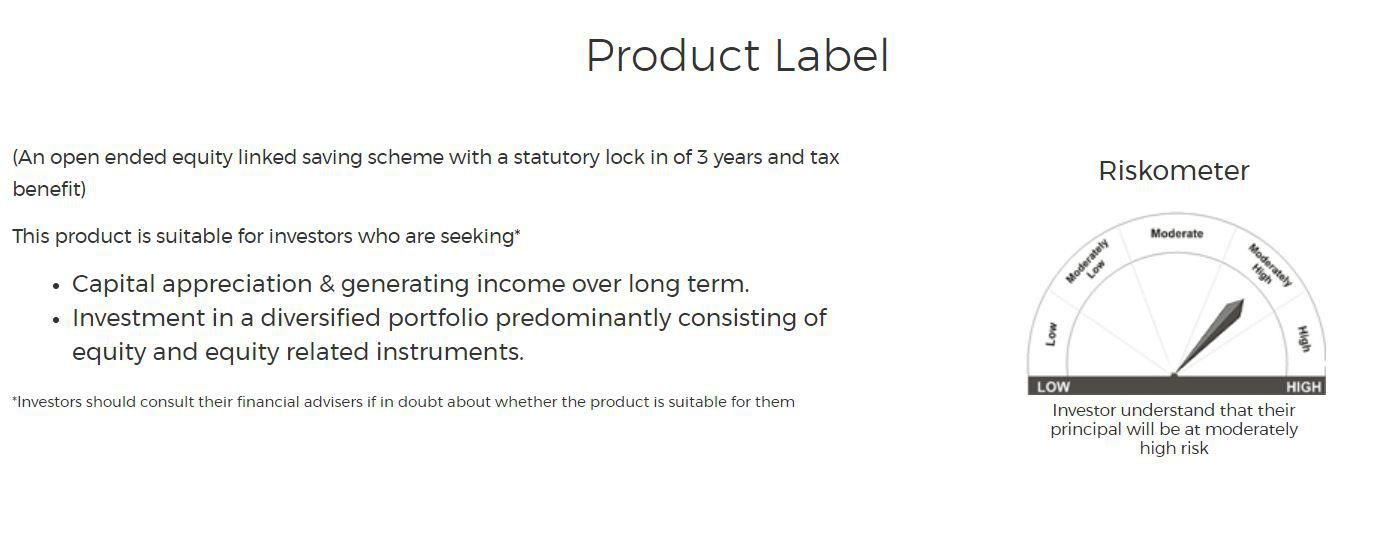
Mutual Fund Investments are subject to market risks, read all scheme related documents carefully
Calculator
View All








Mutual fund investments are subject to market risks, read all scheme related documents carefully.
Copyrights  2020. All rights reserved Axis Mutual Fund.
Privacy | Terms | Disclaimer | Sitemap